The Hidden Costs of Legacy Restaurant POS Systems
Your restaurant POS might have a cheap upfront cost, but disconnected systems create invisible revenue leaks every single shift.
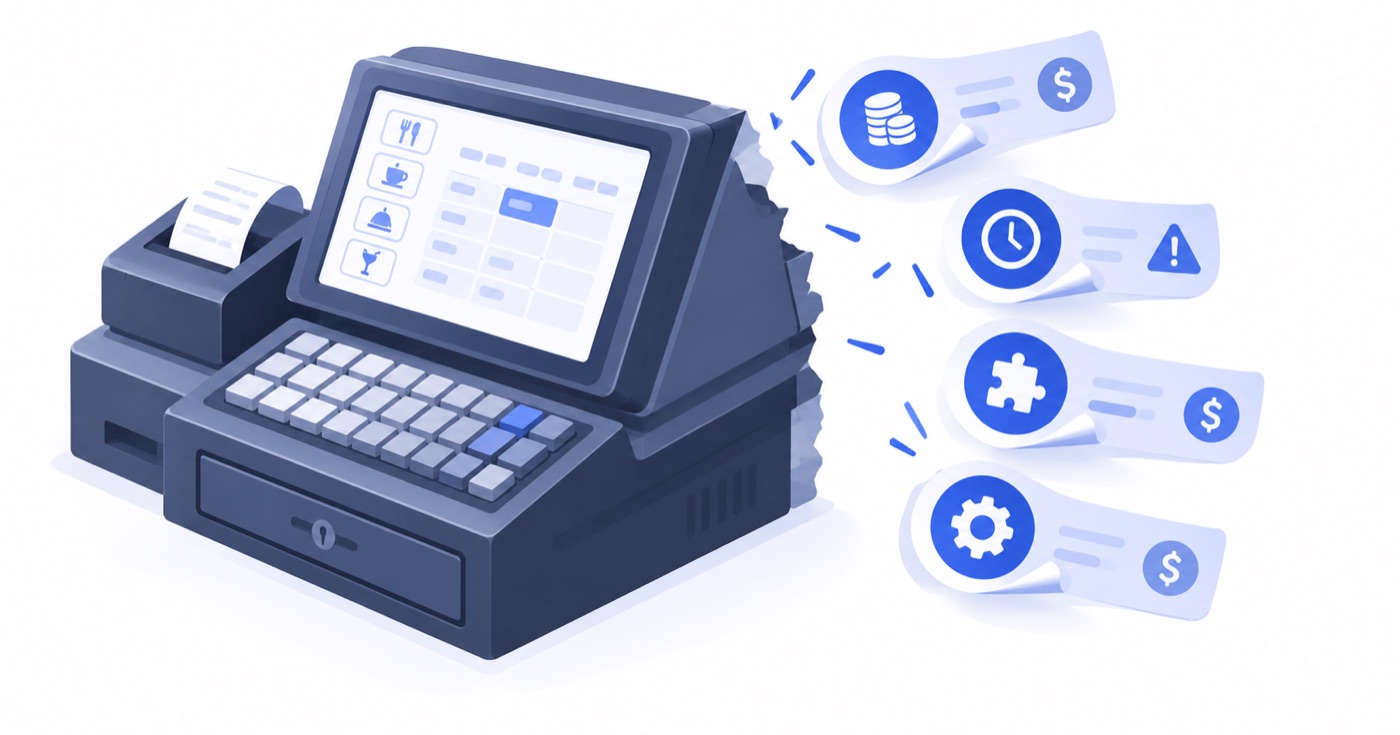
Table of Contents
The Illusion of Cheap Restaurant POS Software
When evaluating a Point of Sale (POS) system for an independent restaurant, cafe, or hotel dining outlet, owners frequently focus on a single metric: **the monthly subscription price tag**. Saving ₹1,000 per month on software feels like a prudent business decision.
However, the software subscription represents less than 5% of the total cost of operating an F&B outlet. The expensive part is what a disconnected or legacy POS quietly costs you in **untracked revenue leakage during every single shift**.
Revenue leakage is money your kitchen earned but your bank account never collected. It does not show up as an explicit expense line item on your profit-and-loss statement—instead, it manifests as a frustrating gap between how busy your dining room was and how little profit remained at month-end.
---
The 4 Invisible Leakage Channels in Legacy POS Systems
```
[Legacy POS Setup - High Leakage]
Kitchen Order Ticket (KOT) Printed ──► Paper Chit Lost / Forgotten ──► Guest Not Billed
Inventory Reconciled Monthly ──► Spoilage & Theft Hidden ──► Food Cost Spikes
[Unified Cloud POS Model - Zero Leakage]
Digital KOT Punched ──► Real-Time Ingredient Auto-Deduction ──► Instant Folio / Bill Posting
```
1. Paper KOT Lost Chits & Unbilled Room Service
In hotel-restaurant operations running disconnected software, room service orders rely on physical paper Kitchen Order Tickets (KOTs). A waiter takes an order, prints a paper slip, gives one copy to the chef, and is supposed to manually walk the second copy to the front desk to add the ₹850 charge to Room 302’s folio.
During busy dinner rushes:
2. Theoretical vs. Actual Food Cost Variance
When your POS is not connected to a live recipe-level inventory engine, ingredient consumption is calculated retroactively at month-end:
$$ ext{Actual COGS} = ext{Opening Inventory} + ext{Purchases} - ext{Closing Inventory}$$
If your actual food cost runs at 36% while your engineered recipe cost dictates it should be 29%, that **7% variance** represents unbilled food, over-portioning, unlogged staff meals, or theft. On monthly F&B sales of ₹8,000,000, a 7% variance represents ₹56,000 in monthly lost profit.
3. Unauthorized Discounts & Untracked Bill Voids
Legacy POS terminals often allow cashiers to void items or apply 20% "manager discounts" without dual-signature validation or instant SMS/WhatsApp alerts to the owner. Cashiers can collect full cash from a guest, void the ticket after the guest departs, and pocket the cash difference.
4. Proprietary Touchscreen Hardware Maintenance
Legacy POS vendors often lock restaurants into expensive, bulky touch-terminal hardware costing ₹40,000 to ₹80,000 per screen. When a thermal printer or touch screen breaks during service, the outlet is forced to buy proprietary replacement parts at inflated prices.
---
Comparative Matrix: Legacy POS vs. Modern Cloud POS OS
| Operational Feature | Legacy Local POS | Modern Cloud POS OS (Antena) |
| :--- | :--- | :--- |
| **Hotel Front-Desk Sync** | Manual paper chits / Batch export | Instant room-folio posting (< 500ms) |
| **Inventory Deduction** | Manual monthly physical counts | Real-time recipe ingredient auto-deduct |
| **Hardware Compatibility** | Proprietary Windows desktop screens | Any tablet, iPad, Android phone, or PC |
| **Audit Log & Voids** | Local file edit (Vulnerable) | Immutable cloud audit log with instant Manager PIN |
| **KDS (Kitchen Display)** | Paper thermal printers only | Digital Kitchen Display System (KDS) screens |
| **GST Invoice Generation** | Basic printing | Automated 5% / 18% GST with ITC reports |
---
Calculating the True Financial Return of System Migration
Consider an independent restaurant generating ₹12,000,000 in annual gross sales:
---
Frequently Asked Questions (FAQ)
Q1: Can kitchen staff use digital Kitchen Display Systems (KDS) instead of paper KOT printers?
Yes. Antena supports both paper thermal KOT printers and digital KDS touchscreens. Kitchen cooks see incoming orders categorized by table number and prep time, tapping "Ready" when dishes are finished to alert waiters instantly.
Q2: How does the system handle split bills when a table of 6 guests wants to pay individually?
The POS interface allows waiters to split a table's bill by specific line items or equal cash/UPI split amounts with a single tap, generating individual GST receipts for each guest without disrupting table management.
Q3: What happens if a room service charge is posted to a room that has already checked out?
Antena's central database performs a real-time stay validation check before accepting a room post. If the room is marked as "Vacant Dirty" or "Vacant Clean", the POS immediately blocks the charge and prompts the waiter to select a valid active stay or collect direct cash/card payment.
Traditional POS vs Modern Cloud POS
| Feature | Traditional POS | Modern Cloud POS |
|---|---|---|
| Hotel Front Desk Sync | Manual paper tickets | Real-time automated sync |
| Inventory & Recipes | Manual monthly counts | Auto-deducted per order |
| Staff Hardware | Expensive proprietary screens | Runs on any mobile phone/tablet |
| Cloud Backups | Local server only (high risk) | Automatic cloud backups |
| GST & Taxes | Manual calculation | Fully automated & compliant |
About Anika Dhingra
Founder
Anika is a founder of Antena. She pairs a technical background with a strong interest in the technology and guest-facing side of hospitality — booking flows, automation, and the numbers that tell an owner what is actually working. She writes about using technology to take friction out of the guest experience and the teams behind it, without piling on complexity.
Related Articles
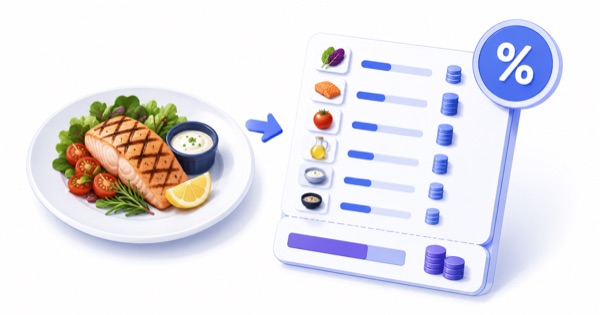
How to Calculate Food Cost Percentage (and Hit a Healthy Target)
Food cost percentage is the single number that tells you whether your kitchen is making money. Here is how to calculate it correctly, what a healthy target looks like, and where the leaks hide.
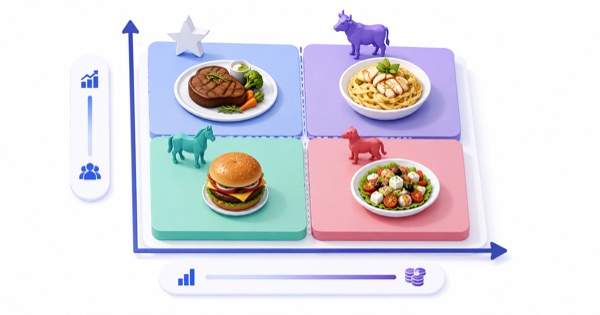
Menu Engineering: Which Dishes Actually Make You Money
Your best-selling dish is not always your most profitable one. Menu engineering sorts every item by popularity and margin so you know what to promote, reprice, or retire.
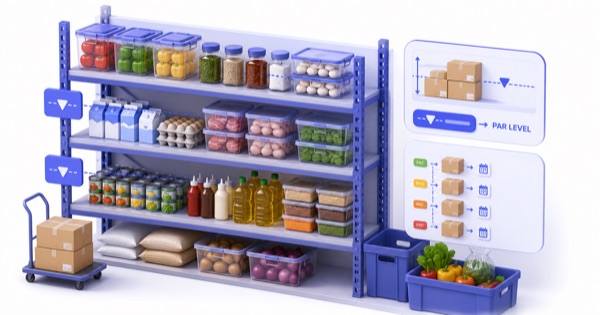
Kitchen Stock-Taking: Par Levels, FIFO, and How Often to Count
Disciplined stock-taking is what keeps a kitchen from over-ordering, running out, or quietly bleeding money to spoilage. Here is a practical system for a small kitchen.