Why Every Hotel Should Automate Housekeeping Assignment After Guest Checkout
Housekeeping delays are a leading cause of late room readiness and guest complaints. Discover how automating housekeeping assignments after checkout transforms hotel operations.
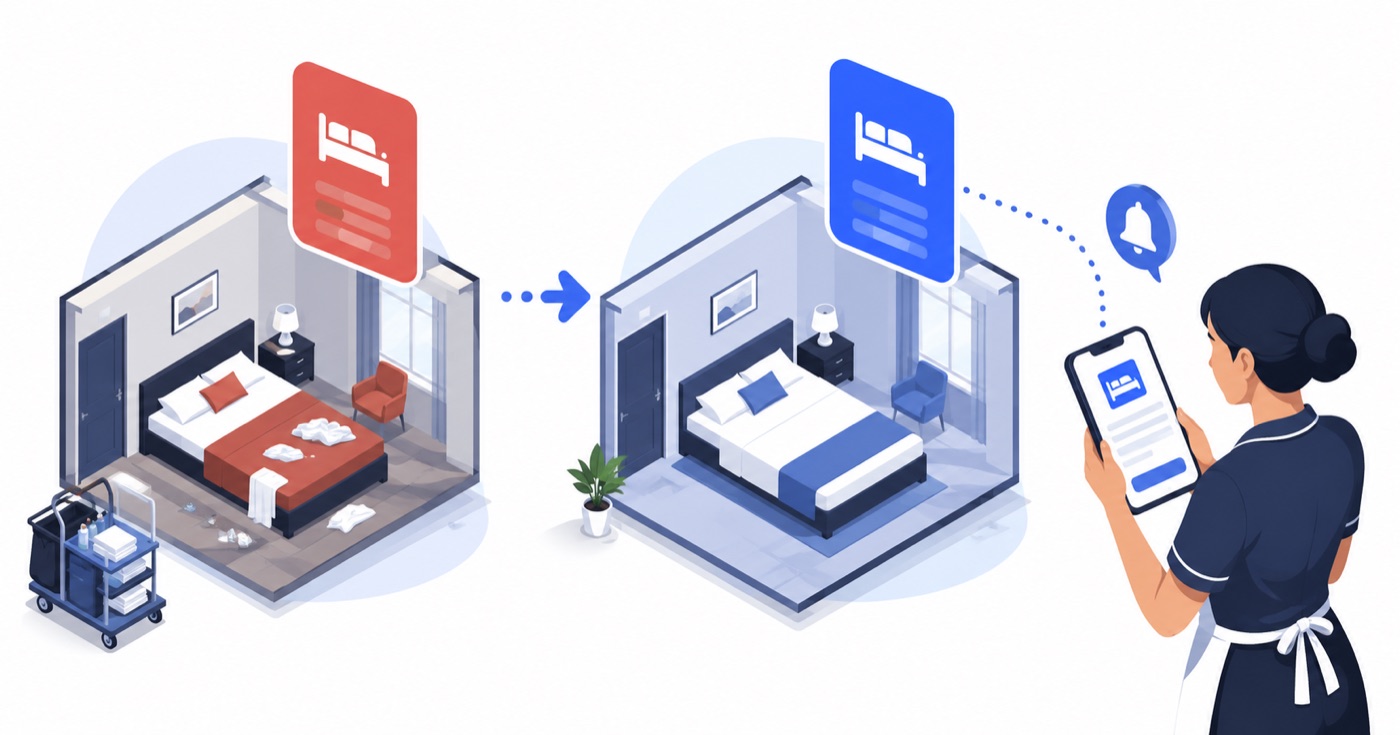
Table of Contents
The hidden cost of manual housekeeping coordination
Housekeeping delays are one of the single biggest operational bottlenecks in the hospitality industry. They lead to late room readiness, lobby overcrowding, stressed front-desk staff, negative guest reviews, and ultimately, severe revenue leakage. Yet, despite major technological advances, many independent hotels, boutique resorts, and serviced apartments still rely on archaic communication channels—such as phone calls, noisy WhatsApp groups, or supervisors manually scribbling room numbers on clipboards—to assign rooms for cleaning after guest checkout.
When room status updates rely on manual communication, a dangerous dead-time window is created. This operational lag compounds throughout the morning shift, pushing room readiness far past the official check-in time (typically 12:00 PM or 2:00 PM) and turning what should be a welcoming arrival into a tense confrontation at the reception desk.
The Anatomy of the Manual Bottleneck
To understand why automation is essential, consider the standard manual workflow that takes place when a guest departs:
In a typical 40-room hotel operating at 85% occupancy, this manual sequence is repeated 30+ times every morning. The cumulative idle time—where a room sits empty and dirty waiting for an assignment—averages **42 minutes per room**. Across 30 turnover rooms, that represents over 21 hours of wasted room availability every day.
---
What happens immediately after a guest checks out in an automated system?
In a modern, cloud-native Hotel Operating System like Antena, the workflow changes fundamentally the exact second the receptionist clicks "Check-Out".
```
[Guest Checkout at Front Desk]
│ (Instant Event Trigger)
▼
[PMS Status Updates: "Occupied" ➔ "Vacant Dirty"]
│
▼
[Smart Routing Algorithm Evaluates Active Staff]
│
▼
[Push Notification to Housekeeper Mobile App]
│
▼
[Attendant Executes Digital SOP Checklist]
│
▼
[Real-Time Inspection & Auto-Sync to Reception]
```
1. Instant Room Status Mutation
The moment the checkout button is pressed, the room status changes in real time from **Occupied Clean/Dirty** to **Vacant Dirty (VD)** across every terminal, tablet, and mobile device connected to the hotel network.
2. Automated Task Generation
The system automatically instantiates a tailored cleaning task. The task configuration dynamically adjusts based on the guest's stay type—a *Checkout Deep Clean* demands a different time allocation and item checklist than a *Stayover Refresh* or an *VIP Arrival Preparation*.
3. Intelligent Staff Routing
The system evaluates the active floor staff who are currently clocked in via the Employee Attendance module and routes the cleaning assignment directly to the optimal housekeeper's smartphone or handheld terminal.
4. Digital SOP Checklist Execution
The housekeeper receives an audible alert, accepts the assignment, and follows a structured digital Standard Operating Procedure (SOP) directly on their screen.
5. Automated Reception Synchronization
As soon as the housekeeper marks the room as "Clean" (or the supervisor approves the digital inspection), the front-desk tape chart updates immediately to **Vacant Clean (VC)**. Arriving guests can be assigned keycards without a single internal phone call or WhatsApp message.
---
Intelligent Task Routing Strategies
Automation is not merely about blasting alerts; it is about intelligent, workload-balanced task distribution. Software engines deploy specialized algorithms to optimize floor operations:
1. Round-Robin Distribution
This algorithm distributes incoming checkout cleaning tasks sequentially across all active housekeepers on duty. It prevents employee burnout by ensuring that no single attendant receives a disproportionate workload during morning check-out rushes.
2. Least-Workload Balancing
The engine calculates the total remaining cleaning minutes assigned to each employee. When a new checkout occurs, the task is routed to the attendant with the lowest cumulative workload at that exact moment.
3. Floor-Proximity Routing
By evaluating room location data, the system prioritizes assigning rooms on the same floor or adjacent wings to the staff member currently working in that zone. This eliminates unnecessary stairwell and elevator transit time.
4. Real-Time Attendance Filtering
Integrating housekeeping dispatch directly with your Employee Attendance System ensures tasks are only routed to staff members who are actively clocked in. If an employee clocks out for lunch or takes a break, the system automatically redistributes unstarted tasks to available peers.
---
Comprehensive Room Turnover SOP Checklist
A standard digital checklist built into the housekeeper’s mobile interface ensures zero missed steps and uniform quality across every room turn:
| Sequence | Phase | Action Items |
| :--- | :--- | :--- |
| **Step 1** | **Assess & Air** | Open curtains/windows, inspect for left-behind items, check for damaged fixtures, turn off AC/lights. |
| **Step 2** | **Strip & Remove** | Remove all bed linens, pillowcases, soiled towels, trash, and food-service trays. |
| **Step 3** | **Top-to-Bottom Dust** | Dust high shelves, headboards, picture frames, desk surfaces, TV screen, and skirting boards. |
| **Step 4** | **Touchpoint Disinfection**| Disinfect door handles, light switches, TV remotes, telephone keypads, and thermostat controls. |
| **Step 5** | **Bathroom Deep Clean** | Scrub basin, shower/tub, replace glass cups, sanitize toilet inside and out, replenish toiletries. |
| **Step 6** | **Bed Making** | Fit fresh bottom sheet, duvet cover, pillow protectors, and smooth out all creases under good light. |
| **Step 7** | **Replenishment** | Restock coffee/tea sachets, complimentary water bottles, laundry bags, and hotel stationery. |
| **Step 8** | **Floor & Final Signal** | Vacuum carpets or mop hard floors starting from the balcony/bathroom toward the main door. Mark Clean on App. |
---
Measuring the Financial Impact of Housekeeping Automation
Let us calculate the economic return of reducing room turnaround time for a medium-sized property:
Operational Scenario: 50-Room Boutique Hotel
Financial Benefits:
---
Frequently Asked Questions (FAQ)
Q1: What happens if a housekeeper discovers a broken amenity or room damage during cleaning?
In an integrated PMS like Antena, the housekeeper clicks "Report Issue" directly inside the room task on their phone, attaches a photo of the damaged item (e.g., a broken kettle or stained curtain), and flags the room as **Out of Order (OOO)**. The maintenance team and front desk receive an instant high-priority notification with the photo attached.
Q2: Do housekeepers need expensive handheld hardware to run this?
No. Modern housekeeping automation apps run on standard, budget-friendly Android or iOS smartphones over local Wi-Fi or cellular data. Staff simply tap their assigned 4-digit Quick PIN to access their task queue.
Q3: How does automated housekeeping assignment handle VIP arrivals?
When a reservation is tagged as "VIP" or "Early Check-In Required" by the front desk, the system automatically elevates the priority level of that room's cleaning task to the top of the housekeeper's queue, bypassing standard round-robin rotation.
---
Conclusion
Housekeeping automation is not about replacing human effort; it is about empowering your cleaning team with clear, real-time instructions so they can work efficiently without administrative friction. By removing manual phone calls, clipboard tracking, and verbal updates, independent hotels can reduce room turn times, eliminate front-desk check-in bottlenecks, and deliver the flawless arrival experience modern travelers expect.
Ready to get started?
Want to see how Antena automates housekeeping? Explore the Hospitality Suite today.
Learn MoreAbout Anika Dhingra
Founder
Anika is a founder of Antena. She pairs a technical background with a strong interest in the technology and guest-facing side of hospitality — booking flows, automation, and the numbers that tell an owner what is actually working. She writes about using technology to take friction out of the guest experience and the teams behind it, without piling on complexity.
Related Articles
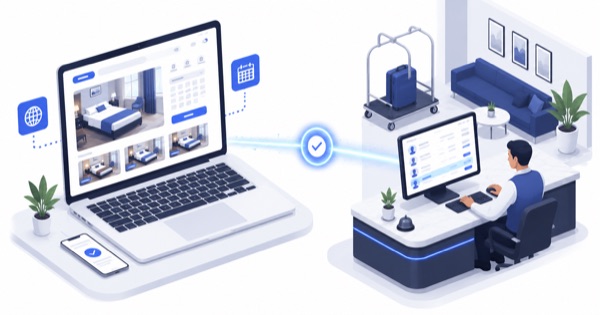
Why Hotels Lose Revenue When Their Direct Booking Website Isn't Connected to Front Desk Operations
Many independent hotels invest in a beautiful booking website but still manage reservations manually. This disconnect leads to overbookings, delayed confirmations, and pricing inconsistencies.
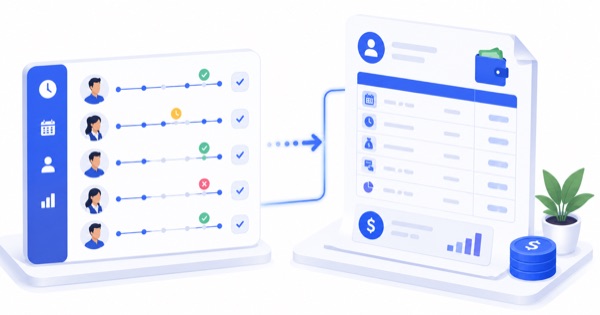
From Attendance to Payroll: Automating the Monthly Reconciliation
Once attendance and leave are tracked accurately through the shift, payroll reporting stops being a separate month-end scramble.
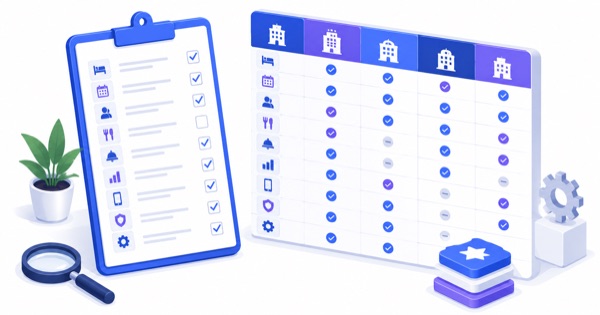
How to Choose Hotel Management Software in 2026
The hospitality industry is shifting from legacy, on-premise servers to modern, unified cloud platforms. Here is what you need to look for when upgrading your hotel PMS.