Setting Up Shift and Leave Policies Your Staff Actually Understand
Working hours, overtime rules, leave quotas, holidays, and geo-fenced clock-ins — configured once as a policy, then applied consistently across your whole team.
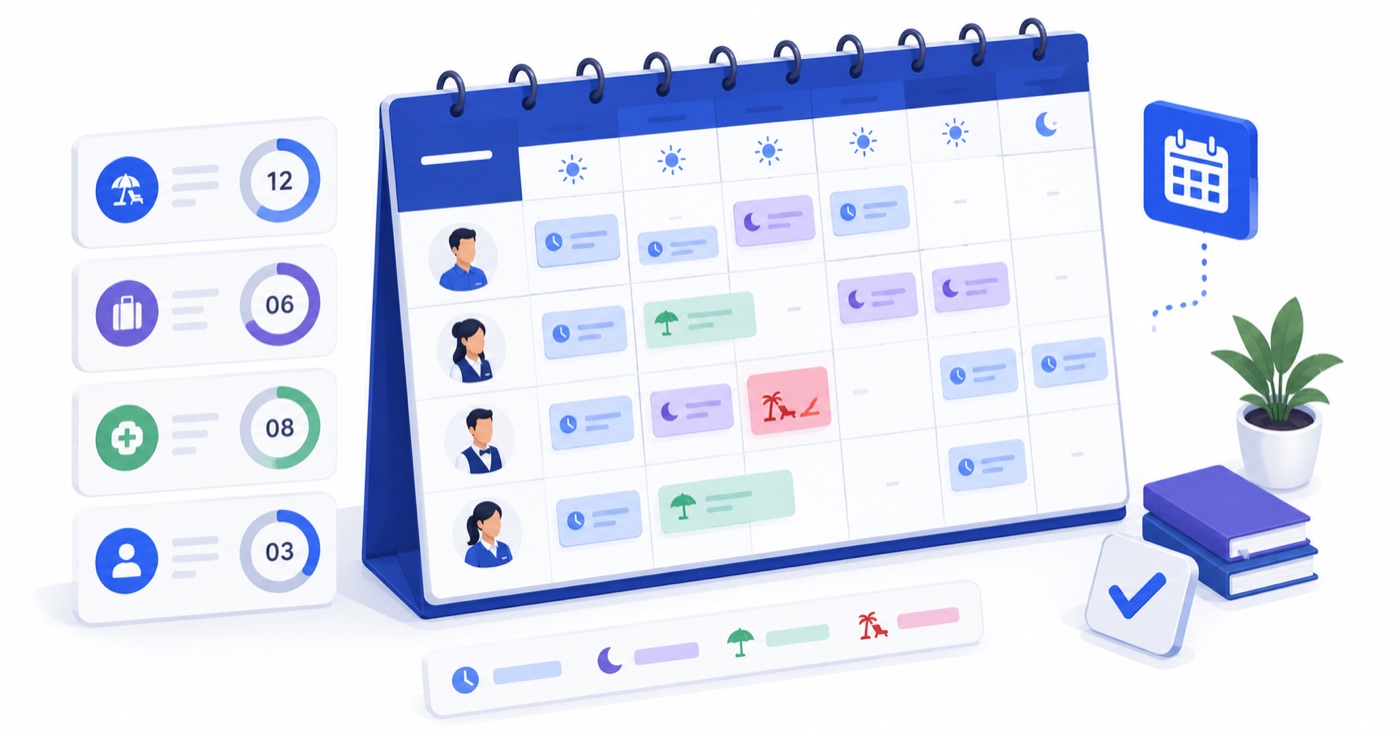
Table of Contents
The Chaos of Ad-Hoc Staff & Leave Management in Hospitality
Managing shift schedules, overtime, annual leave, and holiday pay in independent hotels and restaurants is notoriously prone to friction. In many properties, leave requests are communicated informally over WhatsApp, scribbled in a notebook behind the reception desk, or remembered solely by the property manager.
This informal, ad-hoc approach creates severe operational friction, especially during peak seasonal rushes:
The solution is to establish a **Policy-Driven Operations Framework**. By encoding working hours, leave quotas, grace periods, and overtime multipliers into system-enforced policies, every employee is measured against identical, transparent rules.
---
Structuring a Comprehensive Employee Policy Framework
A robust hospitality staff policy covers five fundamental operational domains:
```
[Employee Policy Framework]
├── 1. Working Hours & Shift Rules (Standard shift lengths, night shift roll-over)
├── 2. Leave Quotas & Accruals (Earned, Sick, Casual, Festival Leave)
├── 3. Overtime Calculations (Daily vs. Weekly thresholds & payout multipliers)
├── 4. Attendance Grace Periods (Late arrival windows, short-shift/half-day rules)
└── 5. Location Controls (Geofencing radius around property GPS)
```
---
Standard Hospitality Leave & Shift Quota Structure
Below is an industry-standard template for independent hotels and dining establishments operating in India:
| Leave Category | Annual Allowance | Accrual Cycle | Carry-Forward Limit | Notice Required |
| :--- | :--- | :--- | :--- | :--- |
| **Earned / Privilege Leave (EL/PL)** | 15 Days | Accrued Monthly (1.25 days/mo) | Max 10 Days to Next Year | 7 Days Prior |
| **Casual Leave (CL)** | 7 Days | Allocated Jan 1st | Lapses Dec 31st (Zero Carry) | 24 Hours Prior |
| **Sick Leave (SL)** | 7 Days | Allocated Jan 1st | Lapses Dec 31st | Same-Day (Medical Note if >2 days) |
| **Festival / National Holidays** | 10 Days | Published Calendar | N/A (Paid Overtime if Worked) | Shift Roster Scheduled |
---
Key Operational Rules to Define Before Automation
1. Shift Definitions & Overnight Boundaries
Hospitality operates 24/7. A common accounting headache occurs during night shifts that cross midnight (e.g., a front-desk shift from 10:00 PM Friday to 6:00 AM Saturday).
2. Overtime Thresholds & Multipliers
Define precisely when overtime begins:
3. Late Arrival Grace Windows & Short Shifts
---
Financial Impact of Automated Leave & Overtime Policy Enforcement
Consider an independent 30-room hotel employing 16 full-time staff members (Front Desk, Housekeeping, Kitchen, Maintenance):
Beyond direct financial savings, automated leave balances reduce administrative time spent resolving staff attendance queries from 8 hours per month down to under 15 minutes.
---
Frequently Asked Questions (FAQ)
Q1: How does the system handle leave requests during peak holiday seasons (e.g., Diwali or Christmas)?
Managers can configure "Blackout Dates" in the Policy Module. During blackout periods, the employee mobile app restricts self-service leave requests for those dates, requiring direct manager override for approval.
Q2: Can different employee tiers (e.g., Full-Time vs. Part-Time Trainees) be assigned different policies?
Yes. Antena supports multi-policy assignment. You can create a "Full-Time Executive Policy" with 15 days EL and overtime eligibility, alongside a "Trainee/Contract Policy" with fixed daily rates and zero carry-forward leave.
Q3: What happens if an employee works on a designated National Holiday?
If an employee is rostered and clocks in on a recognized public holiday, the system automatically registers the shift as "Public Holiday Worked," calculating either double-time pay (2.0x) or adding +1 Compensatory Off (Comp-Off) day to their leave balance based on property preferences.
About Priyanka Singh
Founder
Priyanka is a founder of Antena. She combines a technical background with a close interest in how independent hotels and restaurants actually run day to day. She focuses on turning recurring operational headaches — attendance, stock control, room turns — into workflows that hold up during a busy shift, and writes about the practical, floor-level side of making that happen.
Related Articles
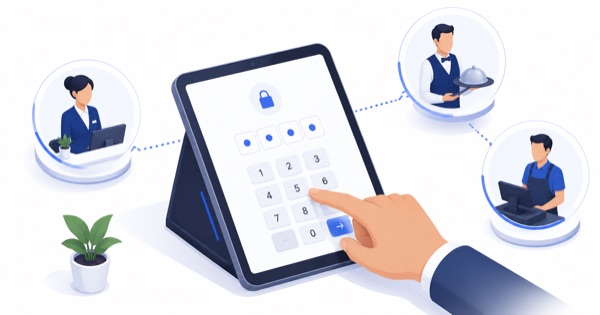
How Role-Based Access and Quick PINs Keep Your Front Desk Secure and Fast
Antena separates who can log into your dashboard from who can work a shift on the floor — here is why that split matters, and how Quick PINs make shift handoffs fast without weakening security.
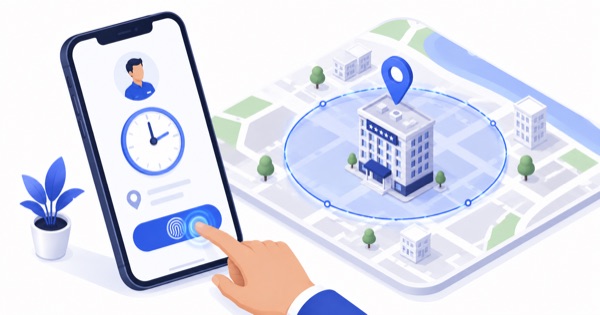
Attendance Tracking Without the Register: Mobile Check-In Explained
How clock-ins, late thresholds, and forgotten checkouts are handled once attendance moves off a paper register and onto a policy-driven system.
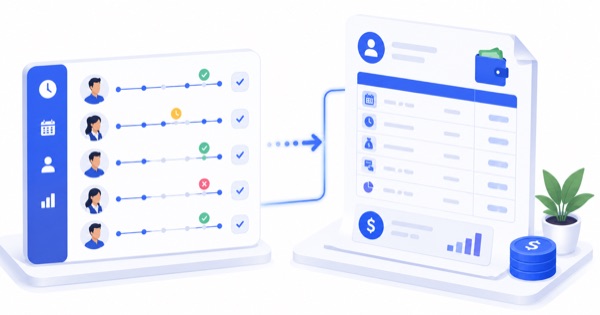
From Attendance to Payroll: Automating the Monthly Reconciliation
Once attendance and leave are tracked accurately through the shift, payroll reporting stops being a separate month-end scramble.