Hotel Room Status Codes Every Front Desk Should Know
VC, VD, OOO, DND — the short codes that pass a room between housekeeping and the front desk. Here is what each one means and why getting them right protects your revenue.
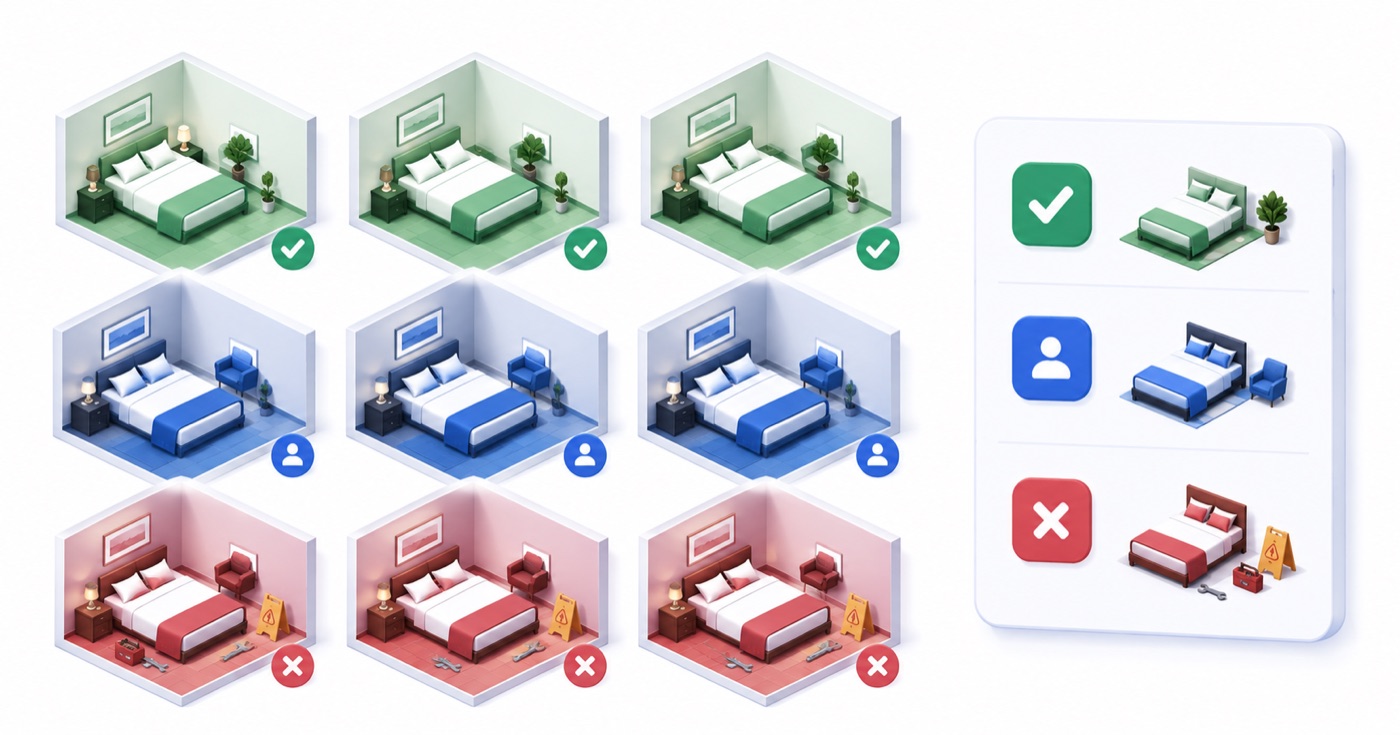
Table of Contents
Why Room Status Alignment Dictates Hotel Profitability
Ask two staff members at an independent hotel what state Room 304 is currently in, and you will frequently receive two contradictory answers:
This breakdown in communication is called a **Room Status Discrepancy**. In paper-based or disconnected hotel operations, status discrepancies occur dozens of times daily.
The consequences are direct and severe:
Establishing a standardized vocabulary of **Hotel Room Status Codes**—and enforcing instant cloud synchronization between housekeeping and reception—is essential for smooth hotel operations.
---
The Master Industry Room Status Code Matrix
Below is the standard operational matrix of room status codes used by professional hotel operators worldwide:
| Code | Full Name | Category | Operational Definition | Front-Desk Action |
| :--- | :--- | :--- | :--- | :--- |
| **VC** | Vacant Clean | Cleanliness | Room is empty, cleaned, inspected, and fully prepared. | **Ready for immediate guest assignment / check-in.** |
| **VCI**| Vacant Clean Inspected | Cleanliness | Room is cleaned AND verified by a Housekeeping Inspector. | Highest priority for VIP check-ins. |
| **VD** | Vacant Dirty | Cleanliness | Guest has checked out; room requires full departure turn. | Assigned to Housekeeping cleaning queue. |
| **OC** | Occupied Clean | Stayover | Guest is in-house; daily refresh clean completed today. | Guest keycard active. |
| **OD** | Occupied Dirty | Stayover | Guest is in-house; daily refresh clean pending. | Rostered for stayover room attendant service. |
| **OOO**| Out of Order | Maintenance | Room has major fault (pipe burst, AC failure, painting). | **Excluded from sellable inventory & occupancy math.** |
| **OOS**| Out of Service | Minor Maintenance| Room has minor cosmetic issue (lightbulb, TV remote). | Kept in total room count; assignable as last resort. |
| **DND**| Do Not Disturb | Guest Signal | Guest displayed DND card or toggled electronic privacy button.| Staff **must not** knock or enter. Follow up after 24 hrs. |
| **MUR**| Make Up Room | Guest Signal | Guest requested expedited room cleaning service. | Elevated to top of stayover housekeeping queue. |
| **SO** | Sleep Out | Exception | Guest paid for room but bed was unused overnight. | Front desk verifies guest welfare / departure status. |
| **SKIP**| Skipper | Exception | Guest departed without settling folio or checking out. | Instant audit of card pre-authorization & guest ledger. |
---
Deep Dive: Critical Code Distinction & Accounting Rules
```
[Total Hotel Inventory: 40 Keys]
│
┌──────────────────────────┴──────────────────────────┐
▼ ▼
[Sellable Rooms: 38 Keys] [Non-Sellable: 2 Keys]
(30 Occupied + 8 VC/VD) (2 Rooms Marked OOO)
│ │
Occupancy = 30 / 38 = 78.9% (Excluded from Denominator)
```
1. OOO (Out of Order) vs. OOS (Out of Service)
Getting this distinction wrong skews your key performance indicators (KPIs):
2. The Danger of Fulfilling Check-Ins on VD (Vacant Dirty)
When receptionists face a long queue during 12:00 PM check-in, they may be tempted to assign keycards to rooms marked VD, assuming "the housekeeper will finish in 5 minutes." This creates severe operational risks. If the housekeeper discovers damaged linens or a plumbing leak, the receptionist is forced to re-key and move the guest mid-turn.
---
Resolving Room Status Discrepancies in Antena
Antena eliminates room status lag by converting status changes into **Real-Time Push Triggers**:
---
Frequently Asked Questions (FAQ)
Q1: What should housekeeping staff do if a room displays a DND sign past 2:00 PM?
Staff should not knock on a DND room. Instead, the housekeeper logs "DND" in their mobile app. The system sends a courteous automated WhatsApp message or front-desk call asking if the guest desires room refresh or fresh towels at a specific time.
Q2: How does automated room status sync benefit hotel revenue?
By eliminating the 40-minute manual communication lag where a cleaned room sits idle before the front desk discovers it is clean, hotels can sell early check-in packages and capture late-afternoon walk-in guests without delay.
Q3: Can a front-desk agent manually override an OOO (Out of Order) status code?
No. To prevent unsafe guest assignments, overriding an OOO status code back to VC requires entering a Manager PIN alongside an optional maintenance completion note.
About Priyanka Singh
Founder
Priyanka is a founder of Antena. She combines a technical background with a close interest in how independent hotels and restaurants actually run day to day. She focuses on turning recurring operational headaches — attendance, stock control, room turns — into workflows that hold up during a busy shift, and writes about the practical, floor-level side of making that happen.
Related Articles
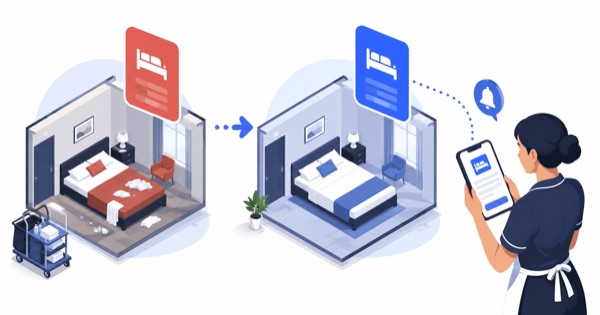
Why Every Hotel Should Automate Housekeeping Assignment After Guest Checkout
Housekeeping delays are a leading cause of late room readiness and guest complaints. Discover how automating housekeeping assignments after checkout transforms hotel operations.

Why Hotels Lose Revenue When Their Direct Booking Website Isn't Connected to Front Desk Operations
Many independent hotels invest in a beautiful booking website but still manage reservations manually. This disconnect leads to overbookings, delayed confirmations, and pricing inconsistencies.
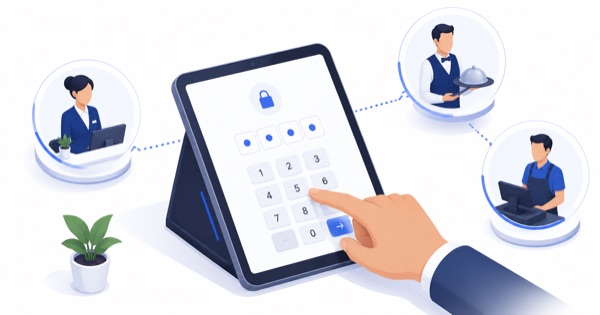
How Role-Based Access and Quick PINs Keep Your Front Desk Secure and Fast
Antena separates who can log into your dashboard from who can work a shift on the floor — here is why that split matters, and how Quick PINs make shift handoffs fast without weakening security.