The Room Turn: A Housekeeping Checklist for Independent Hotels
A consistent room-turn sequence is what lets a small hotel promise a clean room by a fixed time and actually deliver it. Here is a practical checklist and the order that makes it fast.
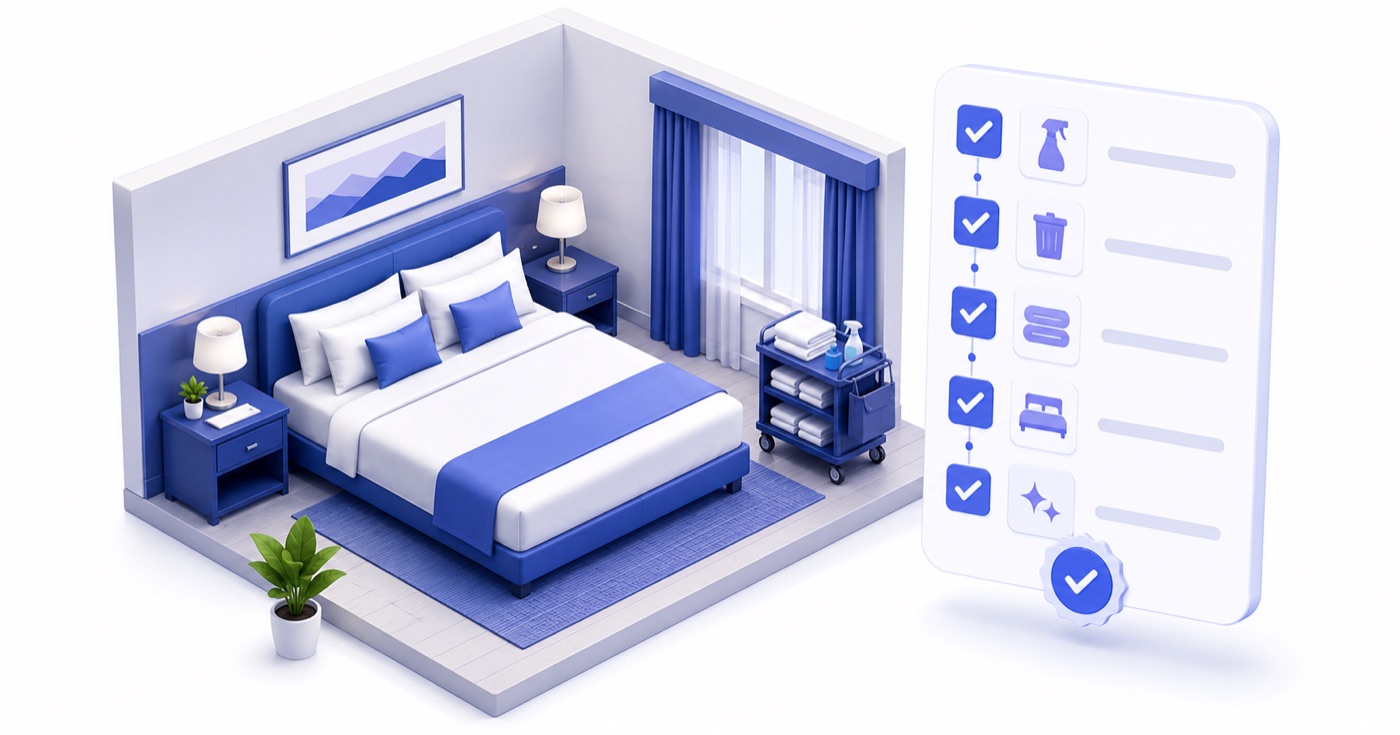
Table of Contents
The Operational Core of Hotel Housekeeping
Room turnaround—converting a **Vacant Dirty (VD)** checkout room into a **Vacant Clean (VC)** ready room—is the single most repeated operational process in any hotel.
In many independent hotels and resorts, room attendants work without a standardized cleaning sequence. Attendant A strips the bed first, while Attendant B scrubs the bathroom mirror first. This lack of standardization introduces severe operational problems:
Implementing a standardized **Top-to-Bottom, Clean-to-Dirty Room Turn Sequence** dramatically improves cleaning speed while eliminating guest complaints.
---
The Master 8-Step Room Turnover SOP Checklist
Below is the standard operational cleaning sequence engineered for maximum efficiency and hygiene:
| Phase | Step Title | High-Priority Action Items | Standard Time Target |
| :--- | :--- | :--- | :--- |
| **Step 1** | **Assess & Air** | Open windows/balcony doors to fresh air; inspect for left-behind guest property or room damage; switch off AC & lights. | **2 Mins** |
| **Step 2** | **Strip & Trash** | Remove all soiled bed linens, pillowcases, and bath towels into corridor hampers; empty all waste bins and room service trays. | **3 Mins** |
| **Step 3** | **Chemical Dwell** | Spray bathroom cleaner/disinfectant on toilet bowl, shower tile, and sink basin, allowing 5 minutes chemical dwell time. | **2 Mins** |
| **Step 4** | **Top-to-Bottom Dust**| Dust all surfaces from high shelf down to desk, TV, headboard, picture frames, and skirting boards using microfiber cloths. | **5 Mins** |
| **Step 5** | **Touchpoint Disinfect**| Sanitize high-touch surfaces: door handles, light switches, TV remote control, telephone keypad, and thermostat dial. | **3 Mins** |
| **Step 6** | **Bed Making** | Fit fresh bottom sheet, flat sheet, and duvet cover; smooth out creases; align pillows evenly under bright lighting. | **6 Mins** |
| **Step 7** | **Bathroom Scrub** | Scrub basin, shower glass, and sanitized toilet; replace glass cups; restock fresh towels, bathmats, and toiletries. | **7 Mins** |
| **Step 8** | **Floor & Final Signal**| Vacuum carpets or wet-mop hard floors starting from balcony toward entrance door; perform final doorway visual scan; mark Clean on App.| **4 Mins** |
**Total Target Turnaround Time per Departure Room:** **32 Minutes**
---
Visualizing the Top-to-Bottom Movement Flow
```
[Room Entrance Door]
│
├──► 1. Open Windows & Air Out
├──► 2. Strip Soiled Linens ──► Carry Out to Cart
├──► 3. Spray Bathroom Chemicals (Start Dwell Timer)
├──► 4. High-Level Dusting ──► Touchpoint Disinfection
├──► 5. Precision Bed Making
├──► 6. Deep Clean Bathroom & Replenish Amenities
└──► 7. Mop Hard Floor Backwards ──► [Exit Door & Mark Clean]
```
---
Housekeeping Quality Inspection Scoring Rubric
To maintain high standards, floor supervisors should spot-check 20% of turned rooms using a 100-point rubric:
Rooms scoring **below 90 points** must be returned to the attendant for immediate correction before being released to VC status.
---
Frequently Asked Questions (FAQ)
Q1: What should a housekeeper do if a departing guest has left valuable personal property (e.g., a wallet or laptop charger)?
The attendant must immediately take a photo of the item inside the room using their mobile housekeeping app and tap **"Log Lost & Found"**. The item is bagged, tagged with room number and timestamp, and logged into the central front-desk vault while the front desk calls the guest.
Q2: How does mobile app inspection speed up room turnaround?
Instead of supervisors carrying clipboard paper sheets down corridors and phoning reception, tapping "Pass Inspection" on a mobile app instantly converts the room status from **Vacant Clean (VC)** to **Vacant Clean Inspected (VCI)** on the front-desk tape chart in under 1 second.
Q3: How do you handle room turnover when guests request eco-friendly linen reuse during stayovers?
For stayover rooms (**Occupied Dirty / OD**), attendants make the bed neatly using existing sheets unless stained, replacing only towels placed in the bath basin by the guest in accordance with international hotel water conservation standards.
About Priyanka Singh
Founder
Priyanka is a founder of Antena. She combines a technical background with a close interest in how independent hotels and restaurants actually run day to day. She focuses on turning recurring operational headaches — attendance, stock control, room turns — into workflows that hold up during a busy shift, and writes about the practical, floor-level side of making that happen.
Related Articles
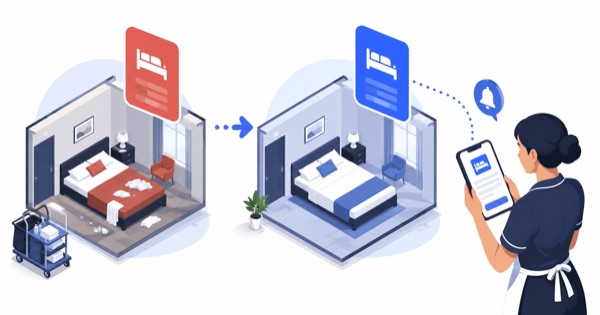
Why Every Hotel Should Automate Housekeeping Assignment After Guest Checkout
Housekeeping delays are a leading cause of late room readiness and guest complaints. Discover how automating housekeeping assignments after checkout transforms hotel operations.
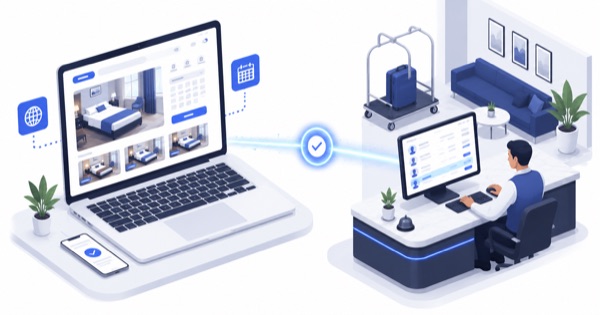
Why Hotels Lose Revenue When Their Direct Booking Website Isn't Connected to Front Desk Operations
Many independent hotels invest in a beautiful booking website but still manage reservations manually. This disconnect leads to overbookings, delayed confirmations, and pricing inconsistencies.
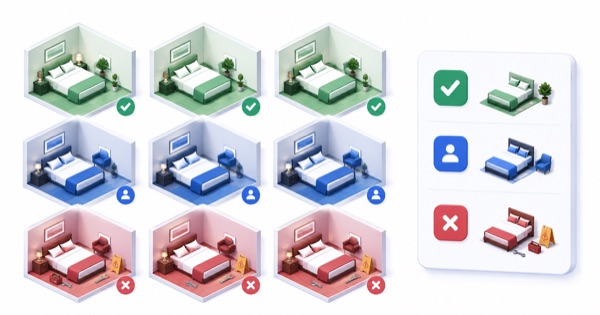
Hotel Room Status Codes Every Front Desk Should Know
VC, VD, OOO, DND — the short codes that pass a room between housekeeping and the front desk. Here is what each one means and why getting them right protects your revenue.