How to Choose Hotel Management Software in 2026
The hospitality industry is shifting from legacy, on-premise servers to modern, unified cloud platforms. Here is what you need to look for when upgrading your hotel PMS.
Table of Contents
The Modern Hospitality Paradigm Shift in 2026
Selecting a Hotel Property Management System (PMS) is one of the most consequential decisions an owner or general manager makes. Software chosen today dictates daily staff efficiency, direct booking margins, guest satisfaction scores, and revenue leakage for the next 3 to 5 years.
In 2026, the hospitality software landscape has reached a defining inflection point. The industry is rapidly abandoning traditional on-premise server installations and disconnected "legacy cloud" wrappers in favor of **Unified Cloud-Native Hotel Operating Systems**.
```
[Legacy On-Premise / Hybrid Model]
Desktop PMS Server ◄──(Sync Lag)──► 3rd-Party POS ◄──(Sync Lag)──► 3rd-Party Channel Manager
(High Server Maintenance + Data Silos + Frequent Double Bookings)
[Unified Cloud OS Architecture]
┌──► Front-Desk Tape Chart & Billing
├──► Integrated Restaurant & Room Service POS
Unified Database ┼──► Direct Website Booking Engine
├──► Real-Time OTA Channel Manager
└──► Mobile Housekeeping & Staff PIN System
```
---
The 4 Core Architectural Generations of Hotel Software
To evaluate vendors effectively, hoteliers must understand which generation of software a vendor is selling behind their marketing claims:
| Generation | Architecture | Key Characteristics | Operational Drawbacks |
| :--- | :--- | :--- | :--- |
| **Gen-1: Legacy On-Premise** | Local Windows Server in back office | Heavy desktop software, serial cables, manual tape backups | Zero mobile access, server crash risk, manual software patches |
| **Gen-2: Hosted Web Wrapper** | Old desktop software put in browser | Browser interface, but built on 15-year-old database schemas | Extremely slow, laggy UI, paid add-ons for mobile or web booking |
| **Gen-3: Integrated Cloud Modules** | Separate cloud tools connected via APIs | Modern UI, but PMS, POS, and Channel Manager are separate tools | API sync failures, double-booking windows during outages, multi-vendor support headaches |
| **Gen-4: Unified Cloud OS (Antena)** | Single database engine running all modules | Front-desk, POS, inventory, direct bookings, and staff management on 1 core | Zero sync lag, instant folio updates, mobile-native execution across all devices |
---
The 6 Mandatory Evaluation Criteria for 2026
Before committing to any software contract, force vendors to demonstrate these six operational workflows live on screen:
1. Unified Single-Database Architecture
Ask the sales agent: *"If a guest orders a ₹450 club sandwich at the pool restaurant, does that charge appear on their front-desk room folio in under 500 milliseconds without an API sync bridge?"* If the answer involves "batch syncing every 15 minutes", you are looking at disconnected software that will create folio discrepancies at check-out.
2. Native Mobile Workflows for Floor Staff
Floor staff—housekeepers, maintenance techs, room service waiters—do not sit at desktop computers. Ensure the software provides responsive Mobile Web or PWA interfaces that allow staff to flip room status, log broken amenities with photo attachments, or punch KOT orders directly from budget smartphones.
3. Built-In Direct Booking Engine with Zero Commission
A modern PMS must include a fast, mobile-first direct booking engine that embeds directly onto your property's website (`antenapro.com`), allowing guests to book rooms with instant payment gateway processing without per-booking commission fees.
4. Automated Regional Tax & Compliance Engine
For properties operating in India, the system must generate fully GST-compliant tax invoices (supporting 0%, 5%, 12%, and 18% GST brackets based on room tariffs and F&B services), automatically calculating CGST, SGST, or IGST based on the guest's state of registration.
5. Instant Role-Based Security & Quick PIN Handovers
Verify that front-desk staff can switch operator identity in under 2 seconds using 4-digit Quick PINs, ensuring that every folio discount, cash settlement, or room move carries an unalterable audit trail.
6. Dynamic Rate Parity & Channel Manager Sync
Your PMS should connect natively to major Online Travel Agencies (Booking.com, Agoda, MakeMyTrip, Goibibo) to update room rates and availability in real time whenever a room is booked at the desk or online.
---
Total Cost of Ownership (TCO) Comparison: 3-Year Projection
Comparing headline monthly subscription fees is misleading. The true cost of software includes setup fees, API integration charges, training, hardware requirements, and transaction commissions.
Scenario: 30-Room Independent Boutique Hotel
| Cost Component | Legacy Integrated Software | Unified Cloud OS (Antena) |
| :--- | :--- | :--- |
| **Base PMS Subscription** | ₹3,500 / month | ₹4,999 / month (Flat Fee) |
| **Separate POS Integration Fee** | ₹1,500 / month | Included (₹0) |
| **Direct Booking Engine Fee** | 3% per booking (~₹4,500/mo) | Included (₹0) |
| **Local Hardware Server Costs** | ₹65,000 upfront | ₹0 (Runs on existing devices) |
| **Annual Support & Setup Fees** | ₹15,000 / year | Included (₹0) |
| **Estimated 3-Year Total Cost** | **₹4,07,000** | **₹1,79,964** |
---
Frequently Asked Questions (FAQ)
Q1: What happens if our hotel's internet connection goes down during check-in rush?
Modern cloud systems like Antena are built with Progressive Web App (PWA) offline resilience. Critical front-desk actions (such as viewing current guest rosters or recording check-ins) continue locally on your browser or tablet and automatically sync with the cloud database the moment connectivity is restored over mobile hotspot or broadband.
Q2: How difficult is it to migrate our existing guest database and room history from our old PMS?
Migration takes under 48 hours. Most modern platforms provide standardized CSV import templates. You can export guest history, room numbers, and upcoming reservations from your old system and bulk-import them into your new Unified OS without losing historical guest profiles or advance bookings.
Q3: Are there hidden fees for adding extra users or floor staff accounts?
With legacy platforms, vendors often charge per user license. With Antena, you can create unlimited staff profiles and Quick PINs for all front-desk agents, housekeepers, kitchen staff, and managers at no additional cost.
Traditional PMS vs Modern Cloud OS
| Feature | Traditional PMS | Modern Cloud OS |
|---|---|---|
| Mobile Access for Staff | Rarely included, or very clunky | Native Mobile/PWA standard |
| Restaurant POS Sync | Requires 3rd-party integration | Built-in and synced instantly |
| Direct Booking Engine | Paid extra add-on | Included out of the box |
| Multi-Property Management | Requires VPNs or complex setups | Switch properties in one click |
| Pricing Model | Hidden pricing, long contracts | Transparent flat monthly fee |
About Anika Dhingra
Founder
Anika is a founder of Antena. She pairs a technical background with a strong interest in the technology and guest-facing side of hospitality — booking flows, automation, and the numbers that tell an owner what is actually working. She writes about using technology to take friction out of the guest experience and the teams behind it, without piling on complexity.
Related Articles
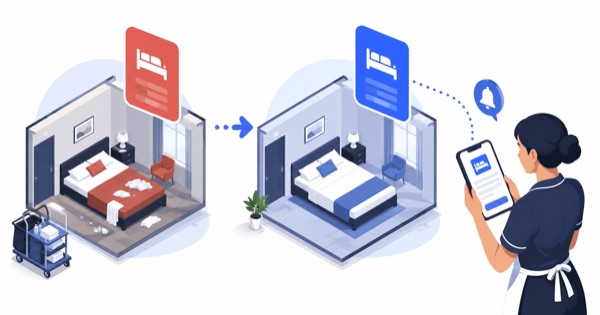
Why Every Hotel Should Automate Housekeeping Assignment After Guest Checkout
Housekeeping delays are a leading cause of late room readiness and guest complaints. Discover how automating housekeeping assignments after checkout transforms hotel operations.
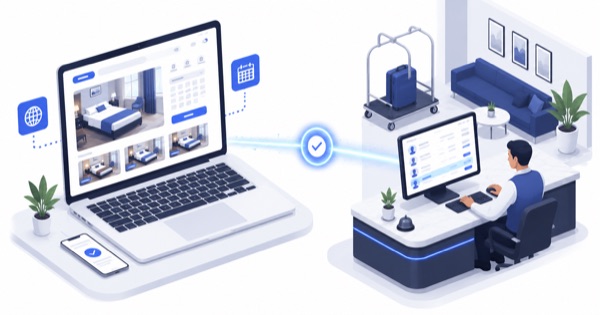
Why Hotels Lose Revenue When Their Direct Booking Website Isn't Connected to Front Desk Operations
Many independent hotels invest in a beautiful booking website but still manage reservations manually. This disconnect leads to overbookings, delayed confirmations, and pricing inconsistencies.
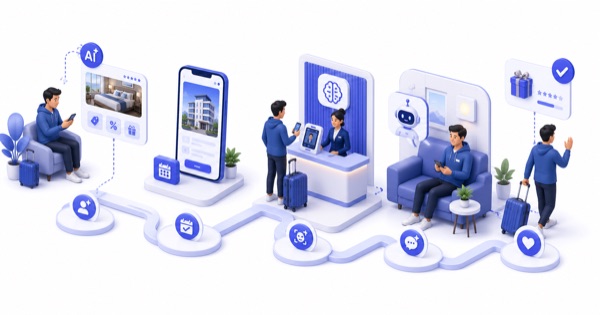
How AI is Reshaping the Travel Industry: From Personalization to Seamless Operations
Artificial Intelligence is no longer a futuristic concept in travel. From personalized trip planning and smart pricing to automated customer support, AI is transforming how we travel.