Kitchen Stock-Taking: Par Levels, FIFO, and How Often to Count
Disciplined stock-taking is what keeps a kitchen from over-ordering, running out, or quietly bleeding money to spoilage. Here is a practical system for a small kitchen.
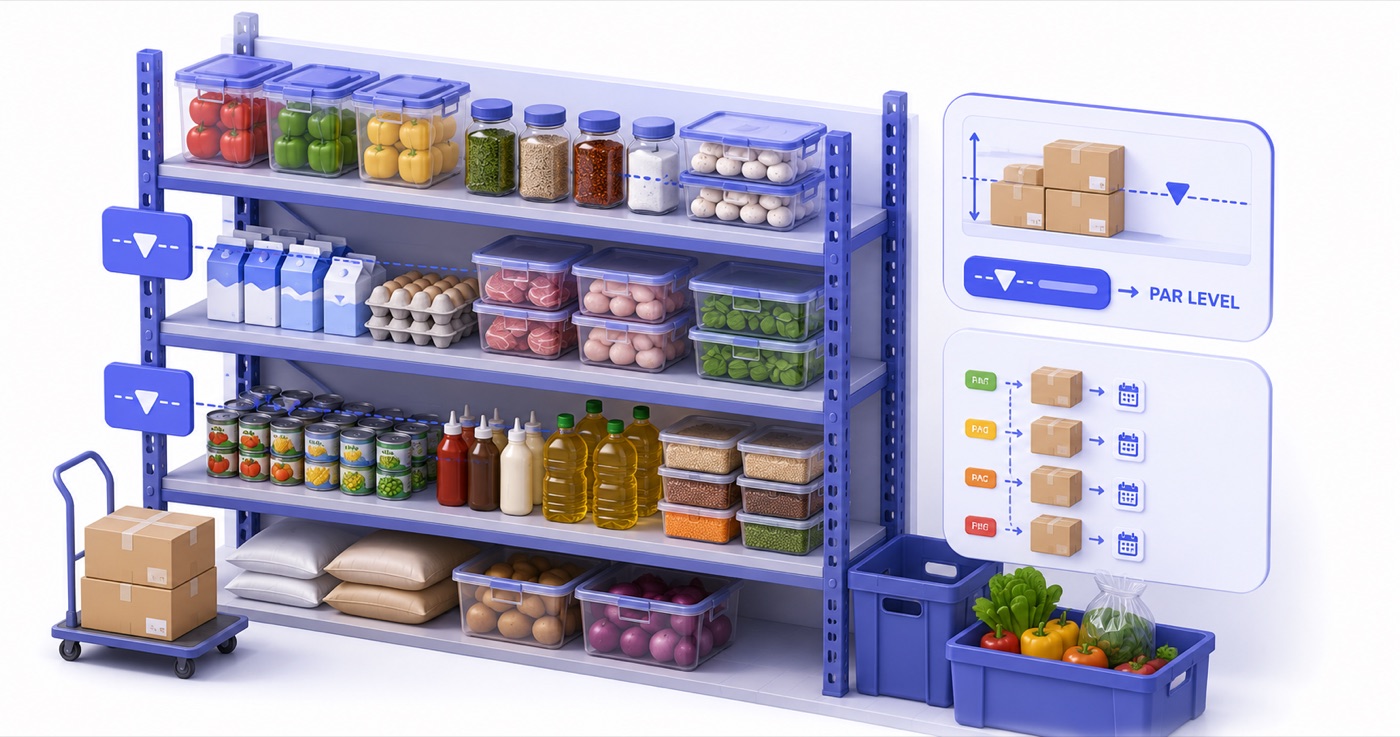
Table of Contents
The Financial Risk of Unmonitored Kitchen Inventory
Kitchen inventory represents a massive portion of an independent restaurant or hotel's working capital. Unlike non-perishable front-desk supplies, raw food ingredients deteriorate rapidly, carry strict expiry dates, and are prone to unrecorded consumption.
Without a disciplined, policy-driven stock-taking routine, kitchens suffer from three recurring financial headaches:
Implementing a standardized **Par Level & FIFO Stock System** eliminates inventory chaos while protecting kitchen profit margins.
---
1. Calculating Scientific Kitchen Par Levels
A **Par Level** is the minimum quantity of a specific ingredient required on hand to sustain normal service demand between supplier delivery cycles, plus a safety safety buffer.
The Par Level Mathematical Formula:
$$ ext{Par Level} = ( ext{Average Daily Usage} imes ext{Delivery Lead Time in Days}) + ext{Safety Buffer Quantity}$$
$$ ext{Reorder Order Quantity} = ext{Par Level} - ext{Current On-Hand Stock}$$
Practical Calculation Example:
A casual dining restaurant uses an average of **12 kg of Paneer per day**. Deliveries occur every **2 days**. The chef maintains a **4 kg safety buffer** for weekend spikes.
$$ ext{Paneer Par Level} = (12 ext{ kg} imes 2 ext{ days}) + 4 ext{ kg} = mathbf{28 ext{ kg}}$$
When the morning stock count reveals **10 kg of Paneer on hand**, the kitchen supervisor automatically orders:
$$ ext{Reorder Quantity} = 28 ext{ kg} - 10 ext{ kg} = mathbf{18 ext{ kg}}$$
---
2. FIFO (First-In, First-Out) Storage & Rotation Protocol
FIFO is the foundational hygiene rule of commercial food storage: **the oldest inventory must always be consumed before newer deliveries**.
```
[Delivery Arrival: Fresh Stock]
│
▼
[Move Existing Older Stock to Front of Shelf]
│
▼
[Place New Stock Behind Older Stock] ──► Date-Label Container (Receive Date + Expiry Date)
│
▼
[Cooks Pull Items Exclusively from Front]
```
Mandatory Labeling Standard for Prepped Items:
Every container in dry stores or walk-in chillers must display a standardized color-coded prep label:
---
3. Recommended Stock-Taking Cadence Matrix
Not all inventory items require the same physical count frequency. Categorizing stock using **ABC Inventory Analysis** optimizes staff labor:
| Inventory Category | Item Examples | Count Cadence | Responsible Role | Objective |
| :--- | :--- | :--- | :--- | :--- |
| **Category A (High Value)** | Premium meats, seafood, imported cheese, liquor | **Daily (End of Shift)** | Head Chef / Sous Chef | Catch portioning leaks & theft instantly |
| **Category B (Moderate Value)** | Dairy, fresh produce, specialized sauces, oil | **Bi-Weekly (Mon/Thu)** | Kitchen Supervisor | Maintain tight par levels & order accuracy |
| **Category C (Bulk / Staples)** | Basmati rice, flour, spices, canned goods, napkins | **Monthly (Last Day)** | Storekeeper / Accountant | Compute accurate monthly COGS for financial P&L |
---
Frequently Asked Questions (FAQ)
Q1: How does automated POS inventory deduction interact with physical stock-taking?
In Antena's Restaurant OS, menu orders automatically deduct raw ingredients from digital inventory using recipe yields. The monthly physical stock-take acts as an audit check: the gap between digital expected stock and physical counted stock highlights kitchen trim waste, over-portioning, or theft.
Q2: What should be done when a supplier delivers short weight or damaged produce?
Kitchen receiving staff must inspect delivered goods against purchase orders before signing invoice slips. If 20 kg of chicken is invoiced but the scale reads 17.5 kg, the receiver logs a **"Credit Memo / Goods Return"** directly into the system, updating the invoice total immediately.
Q3: How do you prevent inventory hoarding during high-inflation periods?
While buying non-perishable staples in bulk can capture volume discounts, hoarding perishable goods ties up working capital and increases spoilage risk. Stick strictly to calculated 7-day par levels for perishables.
About Priyanka Singh
Founder
Priyanka is a founder of Antena. She combines a technical background with a close interest in how independent hotels and restaurants actually run day to day. She focuses on turning recurring operational headaches — attendance, stock control, room turns — into workflows that hold up during a busy shift, and writes about the practical, floor-level side of making that happen.
Related Articles
The Hidden Costs of Legacy Restaurant POS Systems
Your restaurant POS might have a cheap upfront cost, but disconnected systems create invisible revenue leaks every single shift.
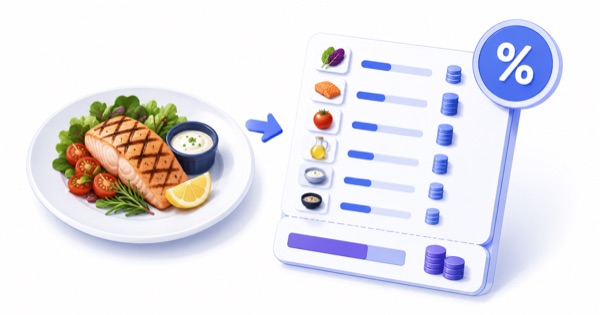
How to Calculate Food Cost Percentage (and Hit a Healthy Target)
Food cost percentage is the single number that tells you whether your kitchen is making money. Here is how to calculate it correctly, what a healthy target looks like, and where the leaks hide.
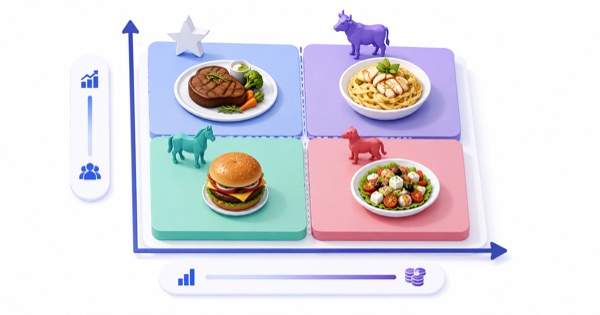
Menu Engineering: Which Dishes Actually Make You Money
Your best-selling dish is not always your most profitable one. Menu engineering sorts every item by popularity and margin so you know what to promote, reprice, or retire.