Navigating Hospitality Industry Growth: Core Drivers and Trends in 2026
The hospitality sector is experiencing a massive wave of growth driven by domestic demand, digitisation, and unified operational software. Here is what is powering this expansion.
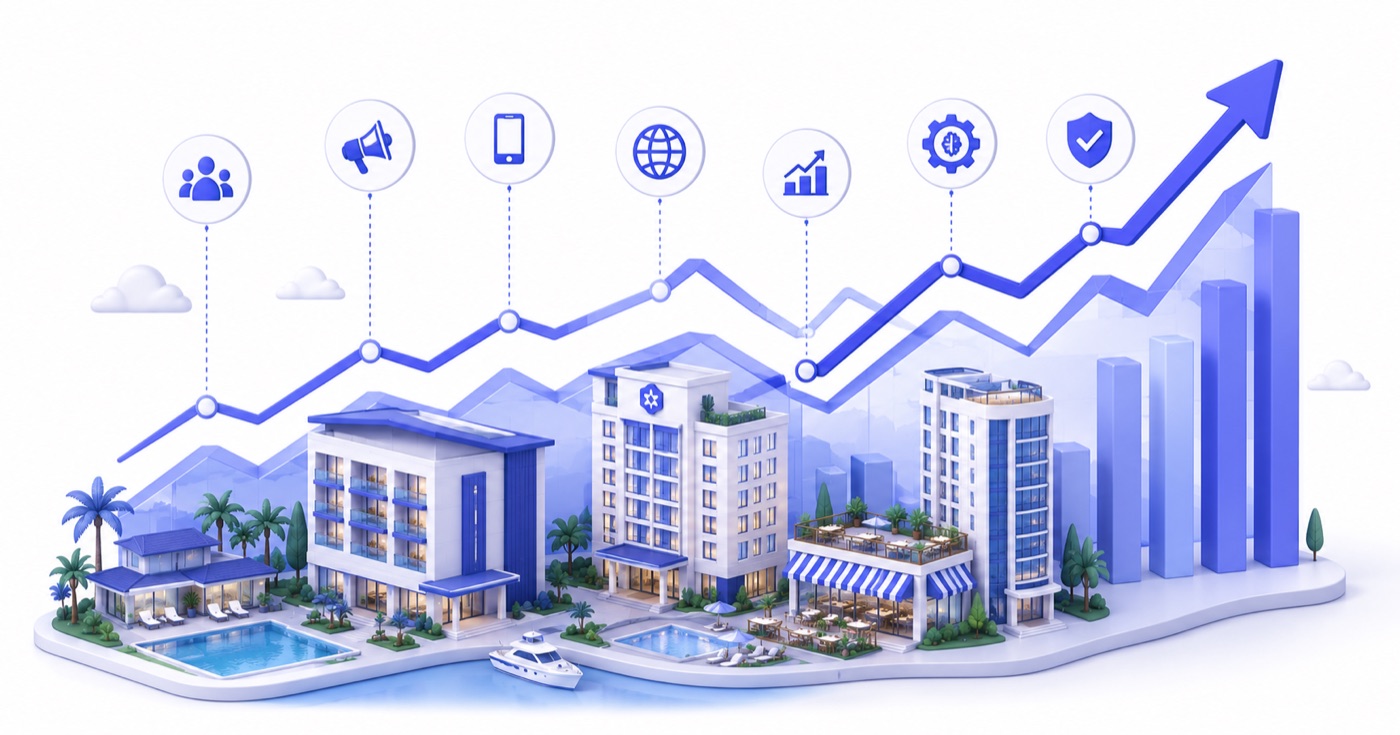
Table of Contents
The Indian hospitality sector is experiencing a period of structural expansion in 2026, transitioning from cyclical post-pandemic recovery into sustained long-term profitability. Driven by rising domestic travel, expanded regional air connectivity, and rapid adoption of unified operational technology, nationwide hotel occupancy levels have stabilized between **63% and 65%**, surging to **72%–74%** during peak travel seasons.
Average Daily Rates (ADR) across midscale and upscale segments hold strong at **₹8,500 to ₹8,700**, generating national Revenue Per Available Room (RevPAR) averages of **₹5,400 to ₹5,600**. For hoteliers and resort owners, capitalizing on this momentum requires understanding the five core trends shaping industry growth in 2026.
---
1. The Tier-II & Tier-III City Expansion Boom
Metropolitan markets (Delhi NCR, Mumbai, Bengaluru) are approaching supply saturation, with land costs and commercial real estate prices squeezing new development yields. Consequently, hospitality development pipelines have shifted dramatically toward Tier-II, Tier-III, and emerging pilgrimage/leisure destinations.
Over **80% of new hotel signings** are concentrated outside Tier-1 metros, in high-growth regional hubs such as Ayodhya, Varanasi, Coorg, Udaipur, Rishikesh, and Chandigarh.
Key Infrastructure Drivers Fueling Tier-II/III Growth
---
2. Adoption of Asset-Light Management Models
To sustain aggressive portfolio expansion without incurring massive capital debt, hotel developers and regional chain operators have overwhelmingly transitioned to **asset-light business models**.
```
+--------------------------------------------------------------------------+
| ASSET-LIGHT HOSPITALITY MODELS IN 2026 |
+--------------------------------------------------------------------------+
| Model Type | Capital Risk | Growth Speed | Margin Share|
| --------------------- | ------------ | ------------ | ------------|
| 1. Management Contract | Low (Owner) | High | 10-15% Fee |
| 2. Revenue Share Lease | Moderate | Medium | 20-30% Split|
| 3. Franchise Agreement | Zero (Brand) | Very High | 4-8% Royalty|
+--------------------------------------------------------------------------+
```
Over **75% of new brand developments** utilize management contracts or franchising agreements. This structure allows property owners to retain real estate equity while benefiting from established brand marketing, centralized reservation systems, and standardized operational SOPs, driving operational margins to **34%–36%**.
---
3. Technology Unification: Eradicating Siloed Revenue Leakage
As properties scale from single locations into regional chains, disconnected software stacks—separate Property Management Systems (PMS), Point of Sale (POS) terminals, channel managers, and accounting spreadsheets—create severe revenue leakage and operational delays.
Financial Impact: Fragmented Legacy Software vs. Unified All-in-One Operating System
| Operational Area | Fragmented Legacy Software | Unified Cloud System (Antena) | Profitability Impact |
| :--- | :--- | :--- | :--- |
| **Front Desk Check-in Duration** | 4.5 Minutes per guest | 1.2 Minutes per guest | 73% Faster Throughput |
| **F&B Bill Transfer to Room** | Manual paper slips | Instant POS-PMS sync | **98% Leakage Eradication** |
| **Channel Inventory Update Rate** | 15–45 Minute delay | Real-time webhooks | Zero Double-Booking Rate |
| **Audit & End-of-Day Closure** | 2 Hours manual labor | 5 Minutes automated | -85% Back-office Labor |
Unified operating platforms consolidate front desk management, restaurant POS, inventory par tracking, and channel distribution into a single real-time database, protecting gross margins from administrative decay.
---
4. Capitalizing on the "Bleisure" & Extended-Stay Micro-Market
The blurring of boundaries between business travel and leisure retreats—commonly referred to as **"Bleisure"**—has transformed guest stay profiles. Corporate travelers increasingly extend Thursday/Friday business trips into weekend stays accompanied by family.
Key Amenities Required for Bleisure High-Yield Rates
Properties offering structured extended-stay rates (5+ nights) maintain **15% higher baseline occupancy** during traditional midweek low-volume windows.
---
5. F&B Margin Optimization & Inventory Controls
With food inflation affecting raw ingredient prices (dairy, poultry, cooking oils), hotel restaurants and banquets must implement precise inventory control mechanisms to protect F&B gross profit margins.
F&B Operational Blueprint for Independent Operators
---
Frequently Asked Questions (FAQ)
Q1: How can an independent 20-room hotel in a Tier-II city compete against newly opening international chain brands?
Independent hotels hold a major advantage in agility and hyper-local authentic hospitality. By deploying modern cloud technology like Antena PMS to ensure seamless digital check-in and dynamic pricing, independent hoteliers match chain-brand efficiency while delivering unique local culinary and cultural experiences that standardized chain brands struggle to duplicate.
Q2: What is the average capital payback period for upgrading legacy hotel software to a unified cloud operating platform?
The payback period for migrating to a unified cloud platform is typically **less than 30 days**. The elimination of F&B billing transfer errors, prevention of OTA over-booking penalties, and labor time saved during daily audits deliver immediate cost recoveries exceeding the software subscription cost.
Q3: How should property owners price rooms during unexpected local demand surges in emerging destinations?
Hoteliers should implement automated **Dynamic Pricing rules** within their channel manager. By setting minimum floor rates (to cover marginal operating costs) and dynamic ceiling rates (allowing tariffs to automatically scale upward during high-demand events like local festivals or conventions), hoteliers maximize RevPAR without risking room under-pricing.
About Soumya Srivastava
Founder
Soumya is the founder of Antena. A close interest in the day-to-day realities of running hotels and restaurants, paired with a technical background, shapes how she approaches hospitality software — starting from the operational problem rather than the feature list. She writes about the business thinking behind smoother front-desk, housekeeping, and F&B operations.
Related Articles
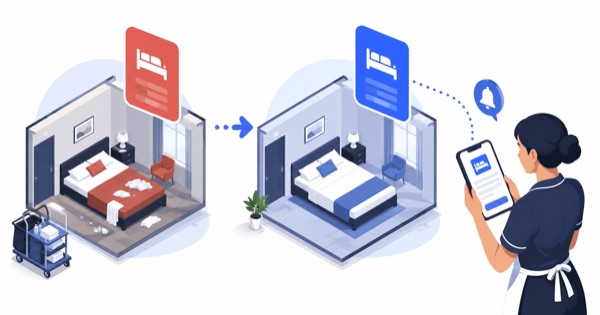
Why Every Hotel Should Automate Housekeeping Assignment After Guest Checkout
Housekeeping delays are a leading cause of late room readiness and guest complaints. Discover how automating housekeeping assignments after checkout transforms hotel operations.
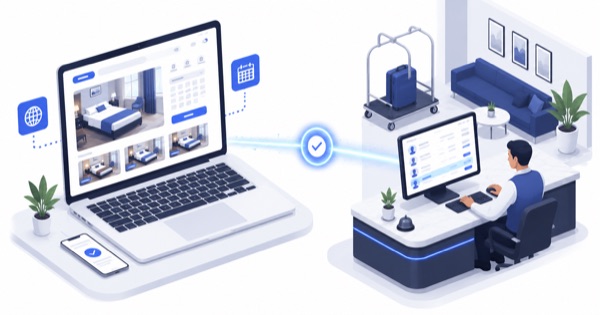
Why Hotels Lose Revenue When Their Direct Booking Website Isn't Connected to Front Desk Operations
Many independent hotels invest in a beautiful booking website but still manage reservations manually. This disconnect leads to overbookings, delayed confirmations, and pricing inconsistencies.
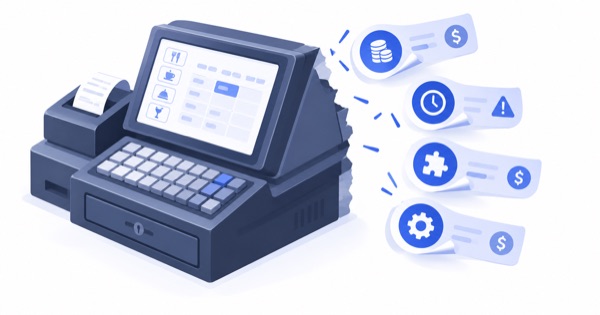
The Hidden Costs of Legacy Restaurant POS Systems
Your restaurant POS might have a cheap upfront cost, but disconnected systems create invisible revenue leaks every single shift.