Service Recovery: Turning a Guest Complaint into Loyalty
A complaint handled well can leave a guest more loyal than if nothing had gone wrong. Here is a simple, repeatable framework your team can use under pressure.
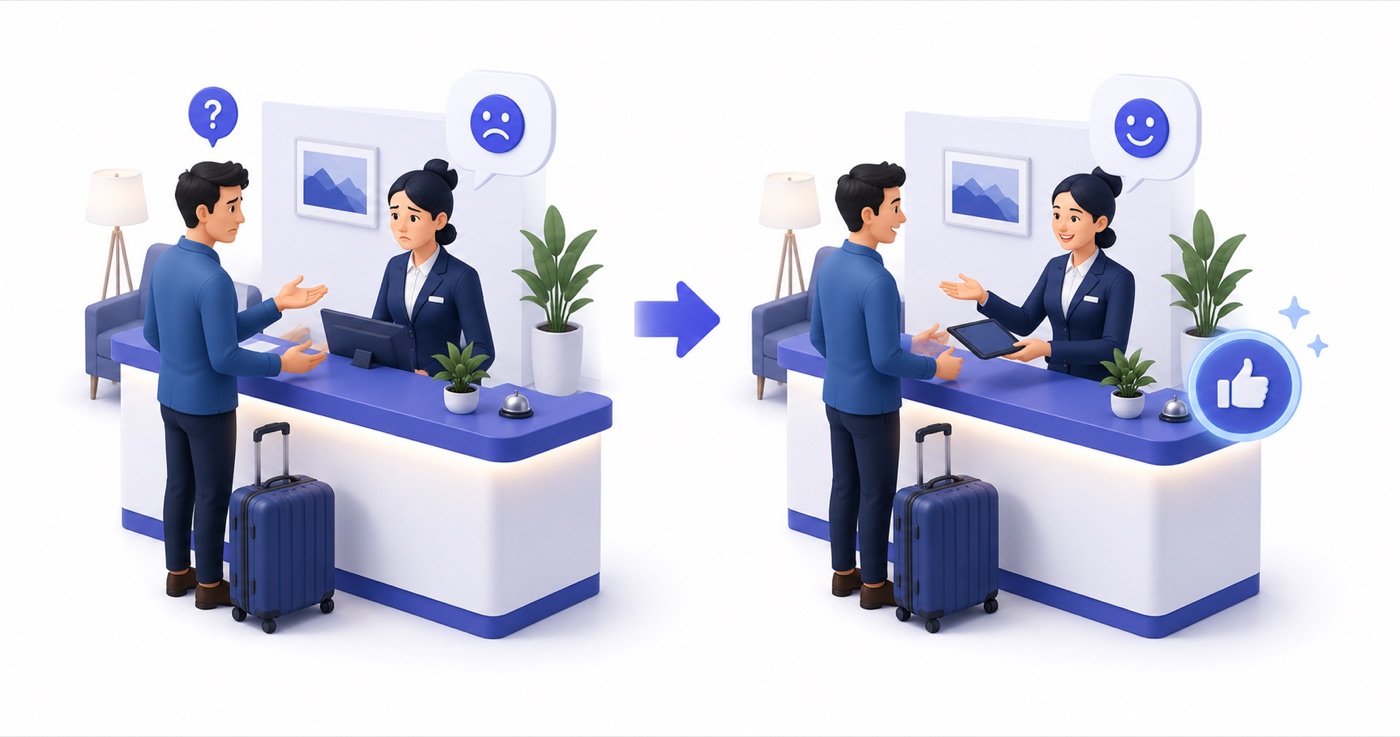
Table of Contents
The Service Recovery Paradox in Hospitality Operations
In hotel and restaurant management, operational errors are inevitable. A air conditioner breaks during a summer heatwave, a room turn is delayed past 2:00 PM, or a kitchen dish is served lukewarm.
What defines world-class hospitality operations is not the total absence of mistakes—it is **the speed, empathy, and structure of the service recovery execution**.
Academic research in consumer psychology identifies a remarkable phenomenon known as **The Service Recovery Paradox**: *A guest who experiences a service failure, but receives immediate, empowered resolution, often exhibits HIGHER brand loyalty and writes MORE positive reviews than a guest who experienced a completely flawless stay.*
When a problem occurs, the guest tests your property's integrity. Resolving the failure with genuine care proves that your hotel values the guest over a temporary operational expense.
---
The LAST Service Recovery Framework
To prevent staff from freezing or getting defensive under pressure, hospitality leaders train floor teams on the **LAST Framework**:
```
[LAST Service Recovery Execution Sequence]
├── L - Listen Actively (Zero interruptions, capture specific details)
├── A - Apologize Sincerely (Empathetic ownership without blaming other departments)
├── S - Solve & Empower (Execute instant resolution within pre-approved thresholds)
└── T - Thank & Follow Up (Express gratitude for the feedback + verify satisfaction)
```
---
Staff Compensation Authority & Goodwill Thresholds
Empowering front-line receptionists and floor supervisors to resolve complaints on the spot—without waiting for General Manager sign-off—is essential for fast recovery.
Below is a recommended Compensation Matrix for independent hotels:
| Failure Severity Tier | Incident Examples | Front-Line Authorization Level | Resolution & Goodwill Actions |
| :--- | :--- | :--- | :--- |
| **Tier 1 (Minor)** | Missing towels, 15-min check-in delay, cold coffee | Receptionist / Waiter | Apology + complimentary beverage / dessert voucher (Value: ₹250–₹500). |
| **Tier 2 (Moderate)** | Room AC malfunction, noise complaint, delayed food | Shift Supervisor / Desk Manager | Room move + complimentary breakfast or late checkout (Value: ₹1,000–₹2,000). |
| **Tier 3 (Severe)** | Plumbing leak, uncleaned room at arrival, lost booking | Duty Manager / GM | Room upgrade to Suite + 50% or 100% room rate credit (Value: ₹4,000+). |
---
Financial Impact: The Cost of Guest Retention vs. Acquisition
Consider the lifetime value of a business traveler who stays 4 times per year:
Failing to resolve a ₹1,500 complaint causes the guest to walk away, resulting in **₹1,80,000 in lost lifetime revenue**, plus negative 1-star TripAdvisor reviews that deter prospective guests. Spending ₹1,500 instantly protects ₹1,80,000 in long-term revenue.
---
Frequently Asked Questions (FAQ)
Q1: How should front-desk staff handle an unreasonable guest demanding 100% refund for a minor issue?
Train staff to maintain empathetic calm: *"Mr. Kapoor, I completely understand your frustration regarding the Wi-Fi disconnect. While I am unable to refund the full room stay, I have immediately upgraded your room to our Executive Floor with dedicated fiber Wi-Fi and credited breakfast to your bill."*
Q2: How does Antena track complaint recurring patterns?
When staff issue an amenity credit or room move, they tag a **"Service Recovery Reason Code"** (e.g., `MAINTENANCE_AC`, `CLEANLINESS_BATHROOM`) in Antena PMS. The system aggregates weekly reports to highlight recurring equipment or training bottlenecks.
Q3: Why is closing the internal loop as important as resolving the guest complaint?
Resolving a complaint with a single guest fixes one symptom. Logging the incident into your PMS ensures maintenance repairs the leaking pipe immediately, preventing the next 10 guests assigned to that room from suffering the same failure.
About Priyanka Singh
Founder
Priyanka is a founder of Antena. She combines a technical background with a close interest in how independent hotels and restaurants actually run day to day. She focuses on turning recurring operational headaches — attendance, stock control, room turns — into workflows that hold up during a busy shift, and writes about the practical, floor-level side of making that happen.
Related Articles
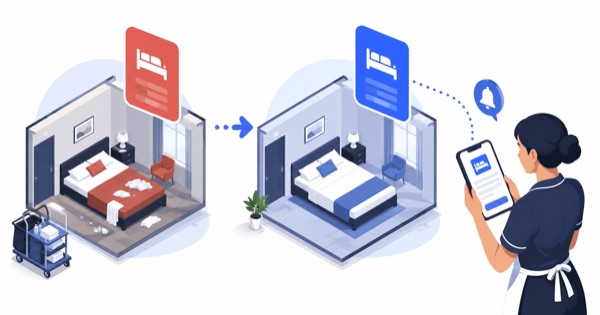
Why Every Hotel Should Automate Housekeeping Assignment After Guest Checkout
Housekeeping delays are a leading cause of late room readiness and guest complaints. Discover how automating housekeeping assignments after checkout transforms hotel operations.
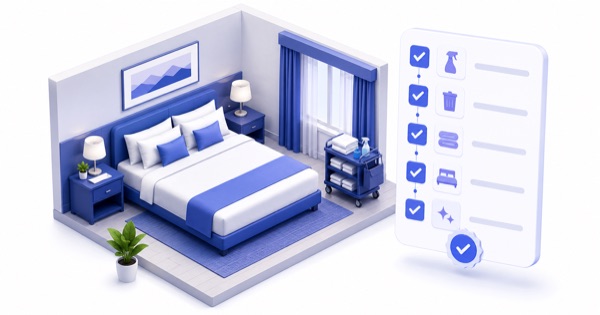
The Room Turn: A Housekeeping Checklist for Independent Hotels
A consistent room-turn sequence is what lets a small hotel promise a clean room by a fixed time and actually deliver it. Here is a practical checklist and the order that makes it fast.
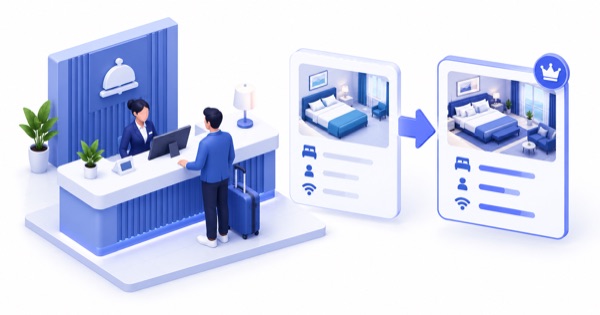
How Front-Desk Upselling Works (Without Being Pushy)
Check-in is the most underused revenue moment in an independent hotel. Done well, upselling raises revenue and guest satisfaction at the same time — here is how.