Why Your Own Website Pays Off: Direct Bookings, Bigger Margins, More Repeat Guests
Listing on travel platforms and food aggregators brings customers, but at a cost you do not control. A direct website is the one channel you own — here is what it does for revenue, for you as an owner, and how to actually drive customers to it.
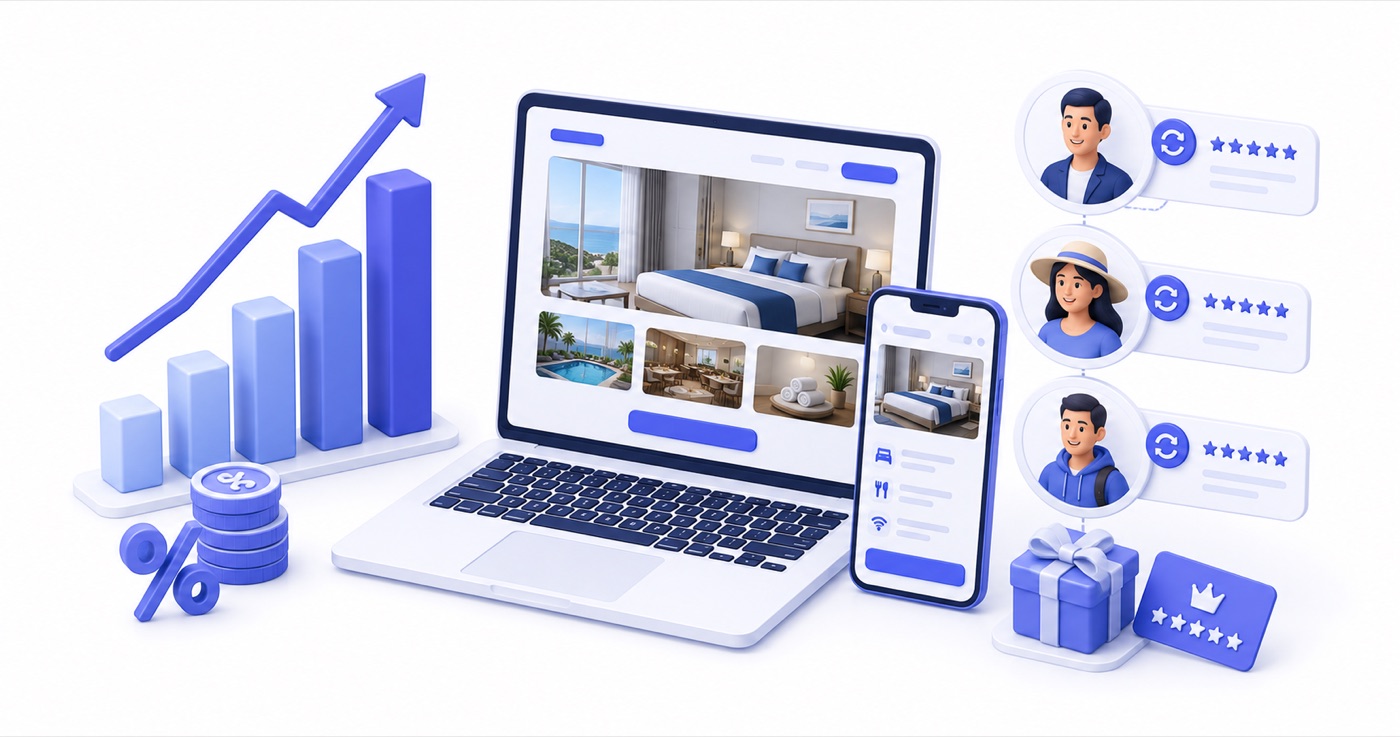
Table of Contents
Every boutique hotel, resort, and dining establishment lives in an era dominated by third-party distribution channels. Online Travel Agencies (OTAs), food delivery aggregators, and search directories deliver valuable top-of-funnel customer traffic. However, this convenience comes at a steep price: intermediaries command commissions between 15% and 28%, restrict access to guest contact data, enforce strict rate parity agreements, and continuously benchmark your business against immediate regional competitors.
Your direct branded website is the single digital sales channel you own outright. When architected as an integrated, real-time booking engine rather than a static brochure, a direct website transforms from a cost-center into your property's highest-margin revenue generator.
---
1. The Financial Reality of Channel Dependency
The primary argument for building a high-converting direct booking channel is financial margin preservation. OTA commission structures erode operating profitability, particularly as labor, energy, and supply costs continue to climb.
Consider the unit economics of a 30-room boutique hotel operating in a Tier-1 or Tier-2 market at ₹4,500 average daily rate (ADR):
Financial Comparison: OTA vs. Direct Channel Net Realization
| Metric | OTA Booking (20% Commission) | Direct Booking (2% Gateway Fee) | Direct Delta (Margin Gain) |
| :--- | :--- | :--- | :--- |
| **Gross Room Rate (1 Night)** | ₹4,500 | ₹4,500 | ₹0 |
| **Platform / Channel Fee** | ₹900 (20%) | ₹0 | +₹900 |
| **Payment Gateway Processing** | Included | ₹90 (2%) | -₹90 |
| **Net Revenue Realization** | ₹3,600 | ₹4,410 | +₹810 |
| **Monthly Margin Impact (100 Room Nights)** | ₹3,60,000 Net | ₹4,41,000 Net | **+₹81,000 / month** |
| **Annual Margin Impact (1,200 Room Nights)**| ₹43,20,000 Net | ₹52,92,000 Net | **+₹9,72,000 / year** |
Shifting just **100 room nights per month** (3.3 rooms per day) from OTAs to your direct website injects nearly **₹10 Lakhs (₹9,72,000) straight into your bottom-line annual net profit**, without adding a single rupee of operational overhead or housekeeping expense.
---
2. Leveraging the "Billboard Effect" Without Violating Rate Parity
Industry research consistently demonstrates the **Billboard Effect**: over **50% of travelers** who discover a hotel on an OTA travel platform subsequently visit the hotel's official website before making their final reservation decision.
They visit your website looking for three things:
Bypassing Rate Parity Constraints with Value-Add Bundling
Many OTAs enforce rate parity clauses, prohibiting hoteliers from publicly displaying lower room rates on their own website than those listed on the OTA platform. Smart hoteliers bypass rate parity legally by offering **exclusive direct value-adds** that OTAs cannot duplicate:
```
+--------------------------------------------------------------------------+
| DIRECT BOOKING VALUE-ADD MATRIX |
+--------------------------------------------------------------------------+
| OTA Listing (₹4,500 / night) | Direct Website (₹4,500 / night) |
| - Room Only | - Free High-Speed Wi-Fi & Parking |
| - Standard 12:00 PM Check-out | - Early Check-in / Late Check-out |
| - Strict Cancellation Window | - Compliment Welcome Drink & Chai |
| - No Upgrade Eligibility | - Priority Room Upgrade (Subject) |
| - Non-refundable Deposit | - ₹300 F&B Voucher for Hotel Bistro |
+--------------------------------------------------------------------------+
```
By keeping the baseline price at ₹4,500 on both channels, you respect OTA rate parity contracts while making the direct channel overwhelmingly superior in guest value.
---
3. Direct Guest Data Ownership & Lifetime Customer Value (LTV)
When a guest books through an OTA, the platform masks their real email address with an encrypted proxy address (e.g., `guest-78x9@guest.ota-platform.com`) and restricts post-stay contact. You are effectively renting the customer for a single stay.
When a guest completes a direct booking on your site:
The Lifetime Value Equation
Data ownership turns one-time transient guests into loyal corporate regulars and weekend retreaters.
---
4. Technical & UX Requirements for High-Converting Booking Engines
A direct website fails if it suffers from slow loading speeds, broken mobile layouts, or cumbersome multi-step booking forms. If reserving a room requires more than 3 clicks or 60 seconds, the guest will bounce back to an OTA.
Non-Negotiable Direct Site Features
```
+--------------------------------------------------------------------------+
| HIGH-CONVERTING DIRECT SITE ARCHITECTURE |
+--------------------------------------------------------------------------+
| [ Mobile-First UI ] ---> [ Live PMS Inventory Sync ] ---> [ Razorpay ] |
| - Loads under 1.8s - Real-time room locks - UPI & Cards |
| - Floating "Book Now" - Instant availability map - Instant SMS |
+--------------------------------------------------------------------------+
```
---
5. 90-Day Blueprint to Shift 25%+ Channel Mix to Direct
Follow this 5-step operational roadmap to build and optimize your direct channel:
Step 1: Claim and Optimize Google Business Profile (Days 1–15)
Step 2: Implement Rate Parity Value Bundles (Days 16–30)
Step 3: Deploy Front-Desk Direct Conversion SOPs (Days 31–45)
Step 4: Automate Pre-Arrival & Post-Stay Communications (Days 46–60)
Step 5: Run Hyper-Local Micro-Targeted Ad Campaigns (Days 61–90)
---
Frequently Asked Questions (FAQ)
Q1: Will OTAs penalize or delist my hotel if I offer exclusive direct booking perks on my website?
No. Standard OTA contracts enforce **rate parity** (matching the base room price), but they do not prohibit hotels from bundling exclusive added value on direct channels, such as free breakfast, complimentary room upgrades, early check-in, or food-and-beverage vouchers.
Q2: How can a small 15-room hotel afford to build a custom website with a real-time booking engine?
Modern cloud hospitality platforms like Antena include integrated, mobile-responsive direct booking engines out-of-the-box. Instead of spending ₹2,00,000+ on custom web development, independent properties can deploy a pre-built, commission-free booking widget synced with their PMS in less than 24 hours.
Q3: What is a realistic goal for direct booking share in an independent property?
While newly opened hotels may rely on OTAs for 70%–80% of initial booking volume, mature independent properties with active direct marketing strategies typically achieve a **30% to 50% direct booking share within 12 months**, dramatically expanding net profit margins.
About Soumya Srivastava
Founder
Soumya is the founder of Antena. A close interest in the day-to-day realities of running hotels and restaurants, paired with a technical background, shapes how she approaches hospitality software — starting from the operational problem rather than the feature list. She writes about the business thinking behind smoother front-desk, housekeeping, and F&B operations.
Related Articles
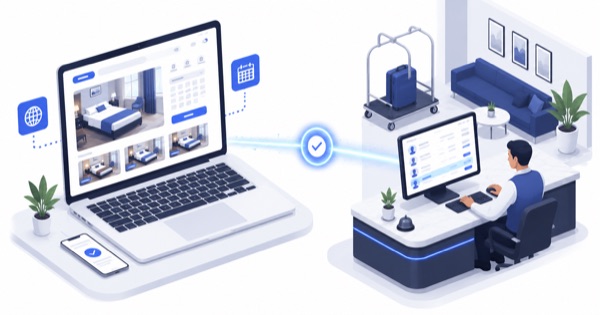
Why Hotels Lose Revenue When Their Direct Booking Website Isn't Connected to Front Desk Operations
Many independent hotels invest in a beautiful booking website but still manage reservations manually. This disconnect leads to overbookings, delayed confirmations, and pricing inconsistencies.
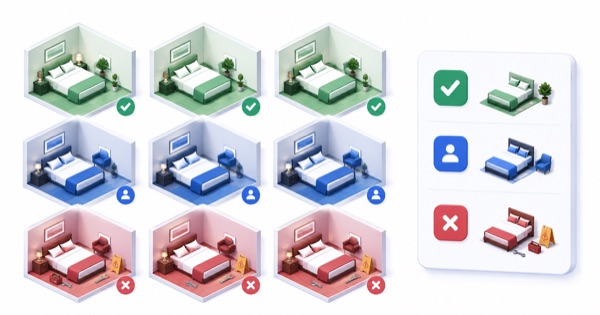
Hotel Room Status Codes Every Front Desk Should Know
VC, VD, OOO, DND — the short codes that pass a room between housekeeping and the front desk. Here is what each one means and why getting them right protects your revenue.
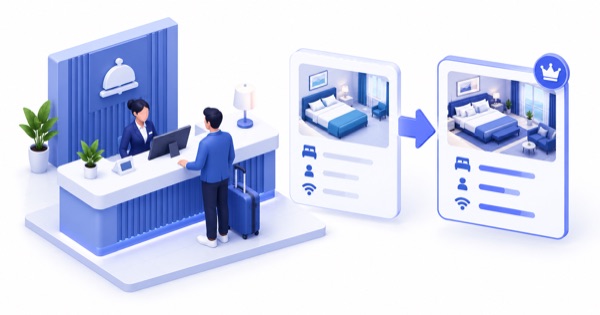
How Front-Desk Upselling Works (Without Being Pushy)
Check-in is the most underused revenue moment in an independent hotel. Done well, upselling raises revenue and guest satisfaction at the same time — here is how.